
Best Fencing for Small Backyard: 2026 Ultimate WPC Buyer Guide
Looking for the best fencing for a small backyard? We break down the top WPC options, space-saving styles, and real costs to help you maximize privacy without crowding your yard.
The 400-Square-Foot Dilemma
Last month, a homeowner in Seattle emailed us. She had a tiny 400 sq ft backyard and needed privacy from her neighbors' second-story deck. Her first instinct? Build a standard 6-foot solid wood fence. We told her to stop right there. A bulky, opaque fence in a micro-yard doesn't just block the neighbors; it makes your own space feel like a concrete box.
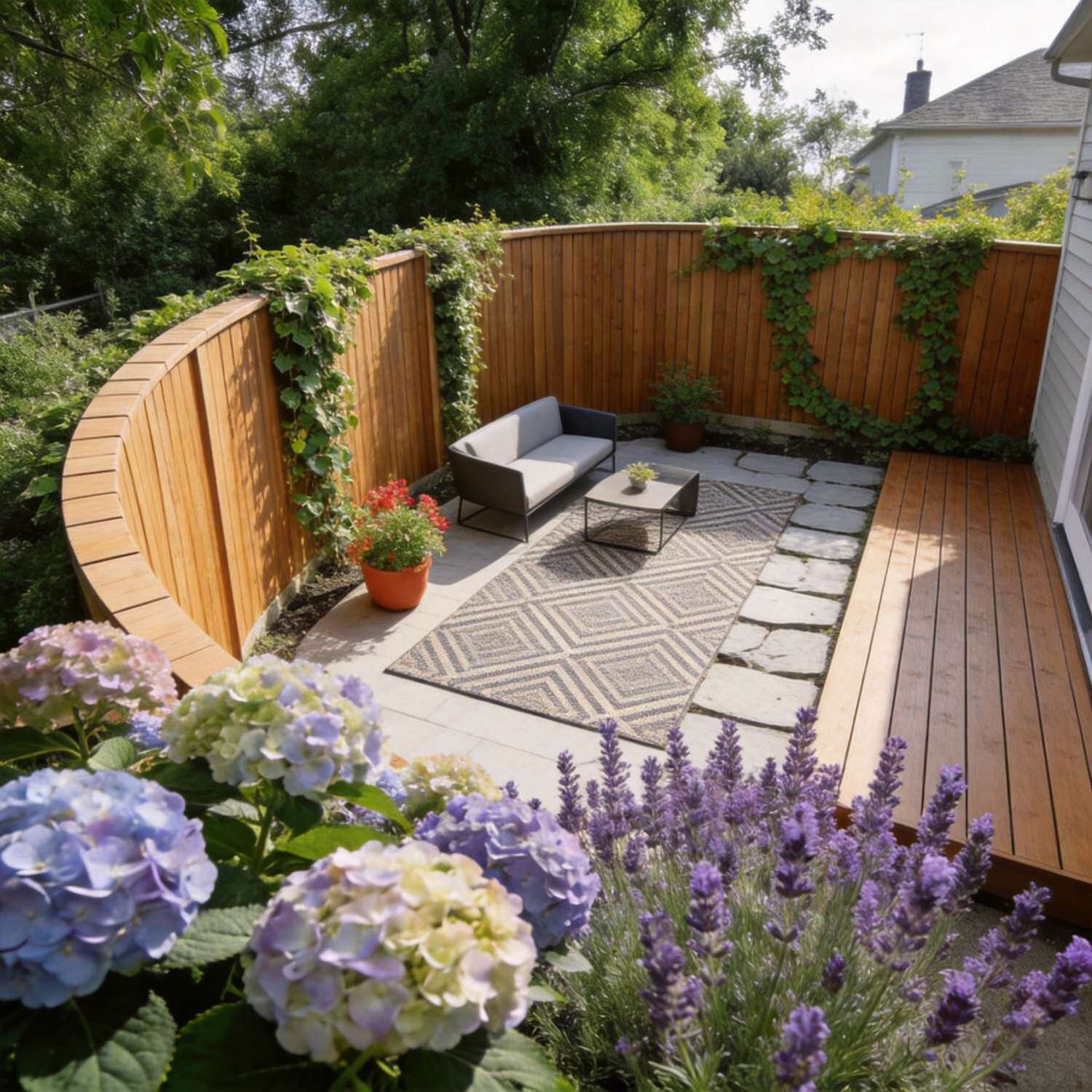
Finding the best fencing for small backyard spaces is tricky. You need privacy, but you also need the illusion of space. That’s where choosing the right material and profile matters more than anything else.
Why WPC? (And Where It Falls Short)
Look, we sell WPC fencing panels for a living. We love it. But let’s be honest—it’s not a magic bullet for every scenario. In a small yard, traditional wood rots, warps, and demands annual staining. You simply don't have the physical space to lay down tarps and paint. WPC solves this. It’s a blend of wood fibers and recycled plastics, giving you the look of timber without the upkeep.
Here’s what we’ve noticed, though. Standard thick WPC boards can look heavy. If you just slap 6-foot solid boards everywhere, your tiny garden will feel claustrophobic. The trick is picking the right style.
3 WPC Styles That Actually Work for Tiny Yards
Forget the generic "solid vs. hollow" debate. For small spaces, the visual profile is everything. Here are the three setups we recommend most often.
1. Horizontal Slat Fencing
This is our number one recommendation. Horizontal lines trick the eye into perceiving width. If your yard is narrow, horizontal slats make it feel significantly wider. We usually recommend a 1-inch gap between the slats. It lets a bit of breeze and dappled light through, keeping the space from feeling like a dungeon, while still blocking direct sightlines.
The catch? It requires precise installation. Horizontal slats need a hidden structural frame behind them. You can't just span them 8 feet between posts; we recommend framing every 24 inches to prevent sagging. Also, if your composite fence posts aren't perfectly plumb, those horizontal lines will look wavy, and you'll notice it immediately in a small, enclosed space.
2. Lattice-Top or Louvered Profiles
If you need to hit a 6-foot height for privacy but want to keep the ground level airy, go for a louvered or lattice-top design. The bottom 4 feet are solid (blocking the neighbor's dog or ground-level eyes), and the top 2 feet are angled slats. It keeps the upper sightline open to the sky. Sound too good to be true? It works beautifully, provided your neighbors don't have a direct downward angle into your patio.
3. Slim-Profile Solid Boards
Sometimes you just need a flat, solid wall. Maybe you're mounting a trellis on it for climbing vines. If you go this route, don't use the thickest 1.2-inch boards. Opt for the slim 0.8-inch solid WPC boards. They offer the same structural integrity and privacy but reduce the visual "thickness" of the fence line, saving you a few precious inches of yard space.
The Real Costs: What Should You Budget?
Let’s talk numbers, because small yards can be deceptive. You might think a smaller perimeter means cheap. But small yards often have awkward angles, existing trees, or concrete patios that make installation a headache.
Generally speaking, a premium WPC fencing system will run you about $45 to $65 per linear foot, fully installed. For a typical small backyard perimeter of 80 linear feet, you're looking at $3,600 to $5,200. That’s roughly 20-30% more upfront than basic pressure-treated pine.
But here is the reality: you’re paying for a 25-year warranty. Most of the time, that realistically translates to 15-20 years of zero maintenance in harsh climates. When you factor in the $300-$500 you'd spend every few years on wood stain and repairs, WPC actually breaks even around year seven. Don't forget the finishing touches, either. Upgrading to heavy-duty, matte black stainless steel hinges costs maybe $80 extra, but it elevates the whole look from 'cheap DIY' to 'custom landscape design'.
Color Psychology in Micro-Yards
Here’s something most guides skip: the color of your fence changes the perceived size of your yard. If you buy dark walnut or charcoal WPC, it creates a striking, modern backdrop. But in a tiny, fully shaded yard, it can feel like a cave. For small, shaded spaces, we usually recommend lighter tones like teak or cedar. They reflect whatever ambient light is available. Conversely, if your small yard gets blasted by afternoon sun, a dark charcoal fence will look incredibly sleek and make the green plants pop. It really depends on your specific microclimate.
Installation Quirks in Small Spaces
Installing a fence in a massive field is easy. Doing it in a 10x20 space? That’s where you earn your keep.
First, post hole digging. If you have an existing concrete slab or tight corners, you might need to use surface-mounted post bases with expansion bolts instead of digging. We usually recommend this only if local wind loads allow it (check your local codes, usually under 70 mph wind zones).
Second, gate swing. In a small yard, a standard 3-foot gate swinging inward eats up 10-15% of your usable lawn space. Consider a sliding WPC gate if the budget allows, or at least ensure your hinge side is optimized so the door doesn't smack your AC unit.
Quick FAQ for Small Yard Fencing
Does WPC fade in small, fully shaded yards?
Not exactly. Our WPC features UV Grade 4-5 resistance. However, in deep shade, you might get some moisture retention or mild algae buildup on the north-facing side. A quick spray with a hose every spring handles it.
Can I cut the WPC boards myself to save money?
You can, but be careful. WPC is dense. You need a fine-toothed carbide blade to avoid melting the plastic. If you mess up the cuts on horizontal slats, the gaps will look uneven. We usually recommend letting the supplier pre-cut the main panels.
Is it fire-safe if my small yard has a fire pit?
Yes. Our WPC products carry a B1 fire rating, which is highly flame-retardant. It won't catch fire from a stray spark, though you shouldn't press an open flame directly against it.
How close to the property line can I build?
Most municipalities require a 2-to-6 inch setback from the property line. In a tiny yard, those 4 inches matter. Check your local zoning before you dig.
Final Thoughts on Maximizing Your Space
At the end of the day, the best fencing for a small backyard isn't just about blocking views. It’s about integrating with the landscape. Don't just build a wall; build a backdrop. Paint the inside of your WPC fence a dark charcoal or forest green, and it will visually recede, making your garden feel twice as deep. It’s a simple trick, but it changes everything.