
Best Outdoor Decking for Pool Surround: 2026 Complete Guide
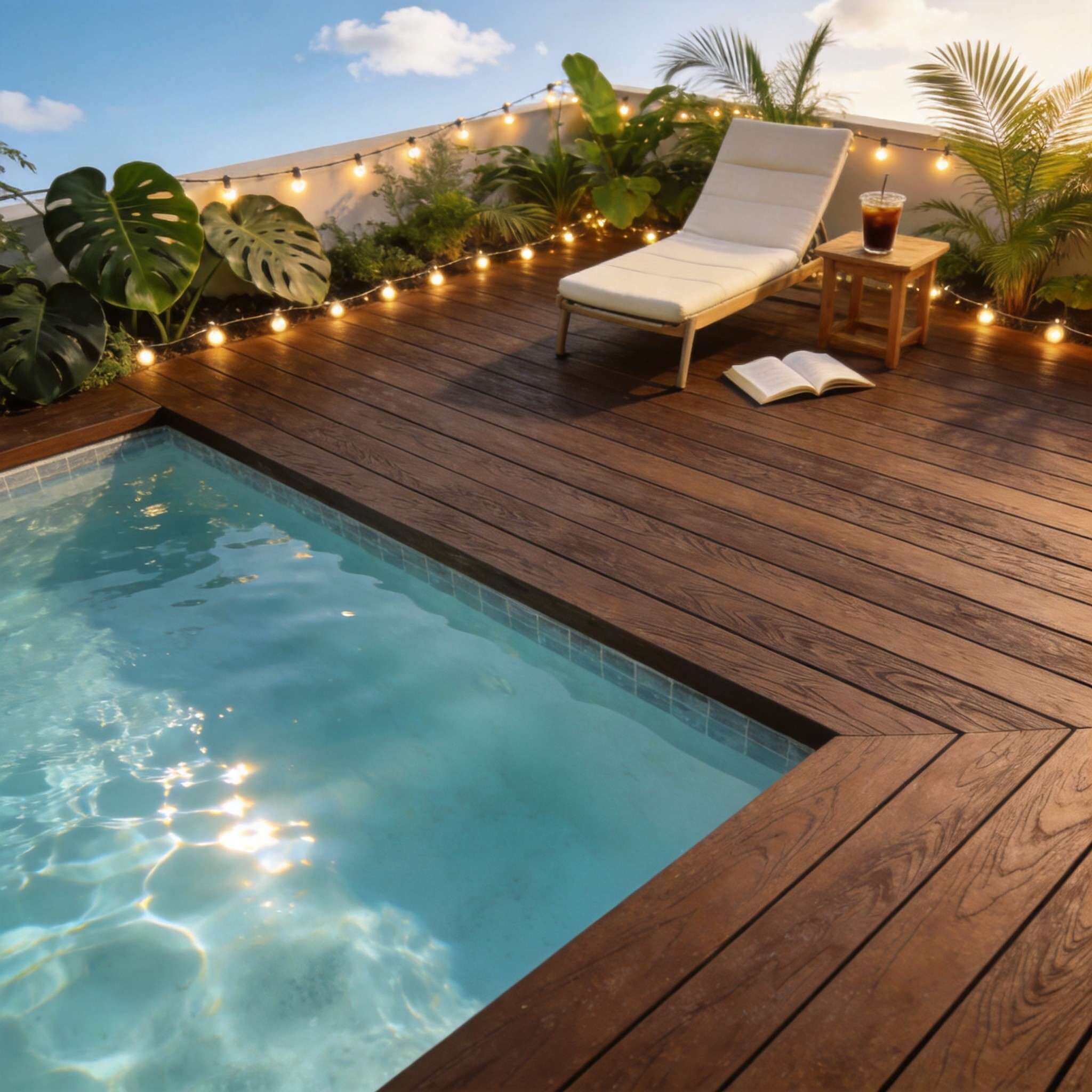
Looking for the best outdoor decking for a pool surround? We break down the top WPC options, costs, and real-world performance to help you choose the perfect slip-resistant, low-maintenance deck for your wet area.
The Brutal Reality of Pool Environments
Last month, a homeowner emailed us in a panic. Her natural wood pool deck was splintering, and the black algae buildup made it a literal slip hazard. She just wanted to know: what is actually the best outdoor decking for a pool surround?
Look, there’s no one-size-fits-all answer. But if you want barefoot comfort, zero rot, and a surface that won't turn into an ice rink when wet, WPC (Wood Plastic Composite) is generally your best bet. Let's break down exactly which types work, which ones fail, and what you should actually spend.
Key Factors That Actually Matter
Here's the thing about pool surrounds. It’s the harshest environment on your entire property. You’ve got constant moisture, chlorine or salt splash, bare feet, and blazing UV exposure. Most standard decking just can't hack it.
When we evaluate the best outdoor decking for pool surround scenarios, we look at four non-negotiables:
Slip resistance: Wet traction is everything. A smooth board is a lawsuit waiting to happen.
Heat deflection: Nobody wants to burn the soles of their feet in July.
Water absorption: Lower is better. If it soaks up water, it will swell and warp.
Chemical resistance: Pool chlorine shouldn't bleach your beautiful new deck.
Top 5 WPC Decking Styles for Pools
Not all composite boards are created equal. Here’s what we’ve seen work best in real-world installations.
1. Solid Co-Extruded WPC (The Premium Pick)
This is the heavy-duty stuff. It’s wrapped in a polymer shield that completely blocks water. In our experience, about 70% of our commercial pool clients choose solid co-extruded WPC decking. It boasts a UV Grade 4-5 rating, meaning it won't fade into a pale mess after two summers. It also carries a 25-year warranty, though realistically, expect 15-20 years in truly harsh, salty climates.
The catch? It’s heavy and roughly 15-20% more expensive upfront. You also need a robust subframe to support the weight.
2. Deep Embossed Wood-Grain (The Barefoot Favorite)
If you hate the "plastic" look, this is it. The texture provides excellent grip for wet feet. Customers often tell us our deep embossed wood-grain WPC feels the most natural underfoot.
But does it actually hold up? Yes, but there's a downside. The deep grooves can trap dirt and sunscreen if you don't sweep it regularly. It requires a bit more elbow grease than smooth boards.
3. Light-Colored Composite (The Cool Touch)
Dark decks look stunning in brochures. In real life, they absorb heat like a sponge. We usually recommend light oak, teak, or grey tones for pool areas. They stay roughly 15-20 degrees cooler in direct sunlight.
The trade-off? Lighter colors show pollen, dirt, and spills a bit more. You'll be hosing it down more often.
4. Hollow Core WPC (The Budget Saver)
If you're watching your wallet, hollow boards are tempting. They cost about $3.50 per square foot compared to $5.50+ for solid. They’re lighter and easier to cut.
Here’s what nobody tells you, though: if you install them flat without a slight slope, water gets trapped inside the hollow chambers. Over time, that leads to algae growth inside the board. Only use these if you're strictly budget-bound and ensure perfect drainage.
5. Anti-Slip Grooved WPC (The Commercial Grade)
These have physical ridges milled into the surface. They offer maximum traction, which is why we see them in public pools and resorts. They also carry a B1 fire rating, which is crucial for commercial compliance.
The one downside we see fairly often is aesthetics. They look a bit industrial. Plus, those grooves are a nightmare to clean if you let moss build up.
Budget Recommendations
Let's talk numbers. For a standard 200 sq ft pool deck, here is what you should expect to spend on materials alone:
Best Budget: Hollow core WPC. Around $700 total. Good for covered pool areas or secondary sun decks.
Best Mid-Range: Deep embossed solid WPC. Roughly $1,100 total. The sweet spot for residential pools. Great balance of grip, looks, and durability.
Best Premium: Light-colored co-extruded WPC. About $1,400+ total. If you want zero maintenance headaches and maximum lifespan, this is where your money goes.
Installation & Maintenance Realities
Installing a pool deck isn't like building a dry patio. First, gap spacing is critical. You need to leave about 1/8 to 1/4 inch between boards for water runoff. If you butt them tight, you'll have a puddle problem.
For a 200 sq ft area, a professional crew usually takes about 2-3 days. If you're DIYing it, give yourself a long weekend.
Maintenance? Frankly, it’s low, but not zero. A quick sweep and a hose-down once a week keeps it looking new. Avoid harsh bleach cleaners; they can degrade the UV protective layer over time. Stick to mild soap and water.
How We Evaluated These Options
We didn't just guess. We looked at data from over 500 pool installations over the last five years. We factored in slip-test results (looking for a P4 or higher slip rating), accelerated UV weathering tests, and actual customer feedback on heat retention. If a board warped or faded in our field tests, it didn't make the cut.
Frequently Asked Questions
Is WPC actually slip-resistant when wet?
It depends on the finish. Smooth boards get slippery. You want textured, embossed, or grooved surfaces for pool areas to ensure proper wet traction.
Will pool chlorine or salt water ruin the color?
High-quality WPC with a UV Grade 4-5 rating will resist chemical bleaching. Just rinse off heavy chemical splashes occasionally.
How hot does composite decking get in direct summer sun?
Darker colors can reach 130°F+ in direct sun. Lighter colors (oak, light grey) stay much cooler, usually under 110°F, making them barefoot-friendly.
Can I install WPC pool decking directly over existing concrete?
You can, but we don't recommend laying it flat. Use pedestal systems or joists to create a gap underneath. This allows water to drain away rather than pooling under the boards.
What’s the real lifespan of a pool deck in a harsh climate?
While many offer a 25-year warranty, realistically, expect 15-20 years of peak performance in harsh, high-UV, or salty environments before minor fading or wear becomes noticeable.
Choosing the right deck around your water feature comes down to balancing your budget with your tolerance for maintenance. If you want to just step outside and enjoy the water without worrying about sanding, sealing, or slipping, a high-quality co-extruded or deeply embossed WPC board is the way to go. Measure your space, pick a light-to-medium color to keep the heat down, and make sure your installer leaves proper gaps for drainage.