
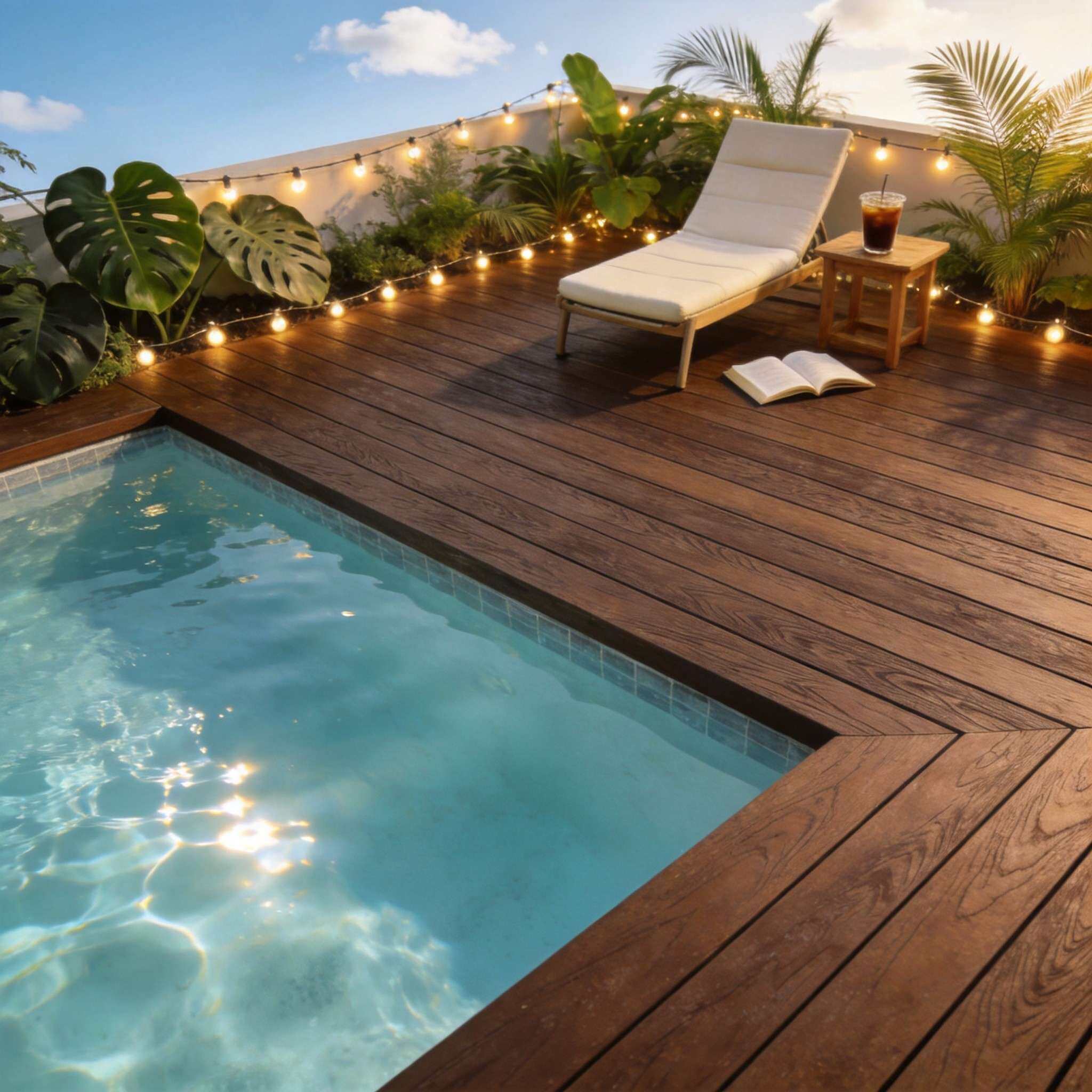
Best Outdoor Decking for Pool Surround: 2026 Buyer's Guide
Looking for the best outdoor decking for pool surround? We break down the top WPC options, real costs, and slip-resistant features to help you build a safe, stunning pool deck in 2026.
Last month, a homeowner called us in a mild panic. Their traditional timber pool deck was splintering, and the algae buildup made it an absolute slip hazard. They just wanted a straightforward answer: what is actually the best outdoor decking for pool surround?
Frankly, a pool deck isn't just any outdoor space. It’s a high-moisture, high-traffic, barefoot zone. You’re dealing with chlorinated water, spilled sunscreen, and blazing summer sun. Sound too good to be true if someone promises a "perfect" material? Well, WPC (Wood Plastic Composite) comes pretty close, but there's no one-size-fits-all. Here’s what we’ve noticed after installing hundreds of pool surrounds.
The Real Dealbreakers for Pool Decking
Before we look at specific boards, let's talk about what actually matters. You might be wondering why your neighbor's composite deck looks terrible after three years. Usually, it comes down to three things.
Slip resistance. Wet feet on smooth composite? Disaster. You need deep embossing or a specialized textured surface. If it looks like a glossy indoor floor, keep walking.
Heat retention. Dark boards can hit 140°F in direct sun. Nobody wants to burn their feet. Lighter colors reflect heat, making a massive difference.
Chemical & Water resistance. Chlorine, salt, and tanning oils will eat cheap materials. For a pool surround, water absorption must be under 1% to prevent swelling and mold.
Top 5 WPC Options We Actually Recommend
Not all WPC is created equal. Here is what we usually recommend based on different needs and budgets.
1. Full Co-extruded Capped Composite
This is the undisputed champion. It features a 360-degree polymer shield that completely locks out moisture. It boasts a UV Grade 4-5 rating, meaning it won't fade into a patchy mess. It’s roughly 15-20% more expensive upfront, but the 25-year warranty is real. Check out our co-extruded WPC decking line for examples.
Pros: Zero water absorption, exceptional stain resistance, longest lifespan.
Cons: Highest initial cost.
2. Deep Embossed Solid WPC
If you want that raw, natural timber feel underfoot without the splinters, this is it. The deep grain provides excellent grip, even when soaked. It’s heavy-duty and perfect for commercial pools or high-traffic residential setups.
Pros: Superior barefoot traction, very sturdy.
Cons: Can trap dirt in deep grooves if not cleaned regularly.
3. Standard Capped Composite (One-sided)
A great middle ground. The top side is capped for UV and water resistance, while the bottom is uncapped. It saves a bit of money while still protecting the visible surface. Our capped composite decking is a popular choice here.
Pros: Good balance of price and performance.
Cons: The bottom can absorb moisture if installed improperly.
4. Hollow WPC with Wide Grooves
The budget pick. It’s lighter and cheaper. But here's the catch: it needs proper drainage and spacing. If you submerge it or let water pool on top, it will fail. Generally speaking, it's fine for covered pool areas or low-budget builds.
Pros: Most affordable, lightweight.
Cons: Lower impact resistance, requires strict installation rules.
5. Light-Colored Textured WPC
This isn't a structural difference, but a crucial style choice. If your pool gets 8+ hours of direct sun, do not buy dark walnut or charcoal. Go for teak, light grey, or sandstone. The temperature difference can be up to 20°F.
Pros: Keeps bare feet cool, brightens the space.
Cons: Lighter colors might show dirt or pollen more easily.
What’s the Damage to Your Wallet?
Let's be honest about costs. Materials are only half the battle.
Budget: Hollow WPC runs about $3.50 to $4.20 per square foot.
Mid-range: Solid capped boards sit between $5.00 and $6.50 per square foot.
Premium: Full co-extruded starts around $7.00+ per square foot.
Don't forget labor. Professional installation for a pool deck usually adds $8 to $12 per square foot. So, a 200 sq ft mid-range deck will cost roughly $2,600 to $3,700 total.
Installation Reality Check & Upkeep
Expect about 2-3 days for a standard 200 sq ft pool deck. But you can't just throw the boards down. Joist spacing is critical. You need 16" on center for straight laying, and 12" on center if you're going diagonal. And please, don't skimp on the hidden clips and joists. Cheap hardware will rust and stain your new deck.
Also, leave a 1/8-inch gap for expansion. WPC moves with temperature changes. Ignore this, and your deck will buckle by August.
Maintenance? It has a B1 fire rating, so it's safe around poolside BBQs. Cleaning is just soap and water. No sealing, no sanding. Most of the time, a quick sweep is all you need.
Questions We Get Asked Constantly
Does WPC get too hot around the pool?
Yes, if you pick black or dark brown. Always go for lighter shades in full-sun environments.
Will chlorine or saltwater ruin it?
No. High-quality WPC is highly resistant to chemicals. Just rinse it off occasionally.
Is it slippery when wet?
Only if you buy the wrong profile. Avoid anything smooth. Look for embossed or brushed textures.
Can I install it directly on concrete?
You can, but you need a sleeper system or specialized joists to ensure water drains underneath. Never glue it flat to concrete.
Look, building a pool deck is a big investment. Don't just chase the cheapest price per board. Think about the next 15 years. A slightly higher upfront cost for a fully capped, light-colored board will save you from replacing a warped, faded mess in a few years. Choose wisely, and enjoy your summer.