
How Much Does Extrusion Die Cost? 2026 WPC Tooling Price Breakdown
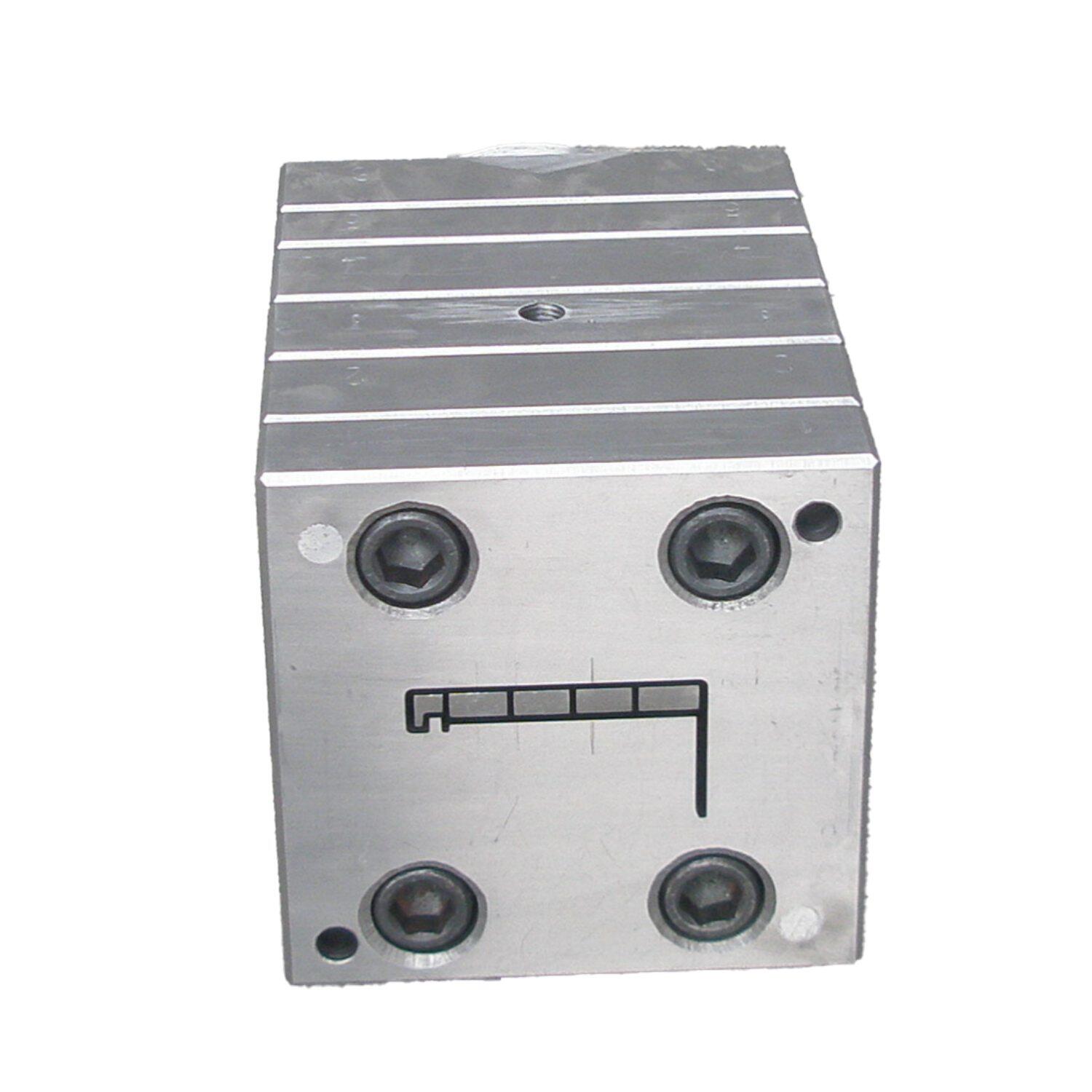
The price of a WPC extrusion die varies wildly, but understanding the real cost breakdown helps you avoid cheap tooling that kills your production line and ruins your profit margins.
The Real Price Range: What You Should Actually Expect
Last month, a factory owner asked me why his quote for a new WPC extrusion die was $12,000 when he saw one online for $3,000. Look, the internet is full of misleading tooling ads. The truth? The price of a WPC extrusion die isn't just a single number. It's a spectrum.
Here’s the raw pricing reality for 2026:
Standard solid profile dies: $2,500 to $4,500. These are your basic solid boards or simple trim pieces.
Complex hollow decking dies: $5,000 to $9,500. Think standard multi-chamber WPC decking profiles.
Custom architectural dies: $10,000 to $18,000+. Intricate WPC wall cladding or specialized WPC fencing profiles with tight tolerances.
But does it actually hold up in real life if you just buy the cheapest option? Frankly, no. A $3,000 die that needs polishing every 50 tons of output will cost you way more in downtime than an $8,000 die that runs flawlessly for 2,000 tons.
What You're Actually Paying For (The Cost Breakdown)
When you hand over a check for a new tool, you aren't just paying for a block of metal. Here is where your money actually goes:
1. Raw Material (30-40% of cost)
Premium dies use imported H13 or H11 tool steel. Cheaper suppliers use domestic equivalents that warp under the high heat and pressure of WPC extrusion. Good steel isn't cheap, but it prevents catastrophic cracking.
2. CNC Machining & EDM (30-35% of cost)
Cutting the internal flow channels requires 5-axis CNC machines and Electrical Discharge Machining (EDM). The more complex the hollow chambers, the more machine hours you're paying for.
3. Surface Treatment & Coating (15-20% of cost)
WPC formulas—especially those with high wood flour content—are incredibly abrasive. A proper die needs hard chrome plating or specialized nitriding on the flow channels. Skipping this to save $500 upfront will destroy the die in six months.
4. Assembly & Flow Balancing (10-15% of cost)
This is the human expertise factor. Our engineers spend hours manually polishing and adjusting the mandrels to ensure the plastic flows evenly. If the flow is unbalanced, your boards will warp or have weak spots.
5 Factors That Spike the Price
There's no one-size-fits-all pricing. Here is what makes your specific quote go up or down:
Profile Complexity: A solid board is cheap to tool. A board with 6 hollow chambers, micro-ribs, and an embossed surface texture requires exponentially more machining.
Material Compatibility: Are you running PVC-based WPC or PE/PP-based WPC? PVC is highly corrosive and requires specialized steel alloys and coatings, pushing the price up by roughly 15-20%.
Output Speed Requirements: If you need a die designed to run at 4 meters per minute instead of the standard 2.5 meters per minute, the internal channels must be redesigned for higher volume flow. That means more engineering time.
Extruder Size: A die built for a 90mm twin-screw extruder uses significantly more steel and requires larger machining setups than one for a 65mm machine.
Calibration Unit Inclusion: Sometimes suppliers quote just the die head. Other times, they include the vacuum calibration and cooling tables. Always check if the calibration unit is in the price.
The Hidden Costs of "Cheap" Dies
Here's what nobody tells you about buying budget tooling: the real cost happens on the factory floor.
When we machine a die for high-end WPC decking, the internal flow channels are designed so the final product easily achieves a UV Grade 4-5 and B1 fire rating. That precision is exactly what allows manufacturers to confidently offer a 25-year warranty on the finished boards.
A cheap die struggles with this. It creates uneven cooling, which leads to internal stresses. The result? Boards that fail the B1 fire test or fade after two years. The cost of scrapping 10 tons of failed WPC material because of a bad die will instantly wipe out the $4,000 you "saved" on the tooling.
Then there's maintenance. Budget dies wear out fast. You'll spend thousands annually on replacement core rods, mandrels, and constant polishing downtime.
How to Keep Your Tooling Budget in Check
You don't always need to spend $15,000. Here are a few ways we help clients optimize their spending:
Standardize your widths: If you're making three different decking profiles, try to keep the overall width the same. You can sometimes reuse the outer housing and just swap the internal core inserts.
Opt for modular designs: Modular dies allow you to change the profile shape without buying an entirely new die body. The upfront cost is higher, but the long-term ROI is massive.
Reuse existing calibration: If you already have calibration tables from an old line, tell the die manufacturer. Designing the new die to fit your existing calibration units saves you from buying new cooling tables.
Frequently Asked Questions
Why is there such a huge price gap between suppliers?
It usually comes down to steel origin, machining tolerances, and whether they actually do flow simulation (CAE) before cutting the metal. Cheap shops just guess and hope it works.
Does the die price include the calibration table?
Not always. Some quotes are for the "die head" only. Always ask for a breakdown to see if the vacuum calibration and cooling tanks are included.
How long does it take to manufacture a custom die?
Generally speaking, 30 to 45 days. If they tell you 15 days, they are likely skipping the crucial heat-treatment and stress-relief phases, which will cause the die to warp later.
What steel grade should I demand for my money?
For standard WPC, premium H13 or H11 tool steel is the minimum. For highly abrasive formulas (like those with high bamboo fiber content), ask for specialized nitrided steel or tungsten carbide inserts in the wear zones.
Can I reuse an old die for a new WPC formula?
Sometimes. If you're just changing the color, yes. But if you're switching from a PVC-base to a PE-base, the melt viscosity changes completely. The old die will likely cause severe flow issues.
How much does it cost to maintain or repair a die?
Routine polishing and minor part replacements usually run $300 to $800 per service. If the flow channels are damaged due to improper cleaning, rebuilding can cost 30-50% of the original die price.
Is it cheaper to buy a multi-cavity die?
A multi-cavity die (producing two boards at once) costs about 40-60% more upfront than a single cavity. However, it doubles your output per hour, cutting your energy and labor costs per board by roughly 25%. It pays for itself in about 8-12 months of continuous running.
Buying an extrusion die is a capital investment, not a consumable purchase. Look at the total cost of ownership over the next five years, not just the invoice price on day one. A well-engineered die pays for itself in reduced scrap, lower energy usage, and zero downtime.