
How Much Does PVC Pergola & Gazebo Cost for a 12x12 Space? (2026)
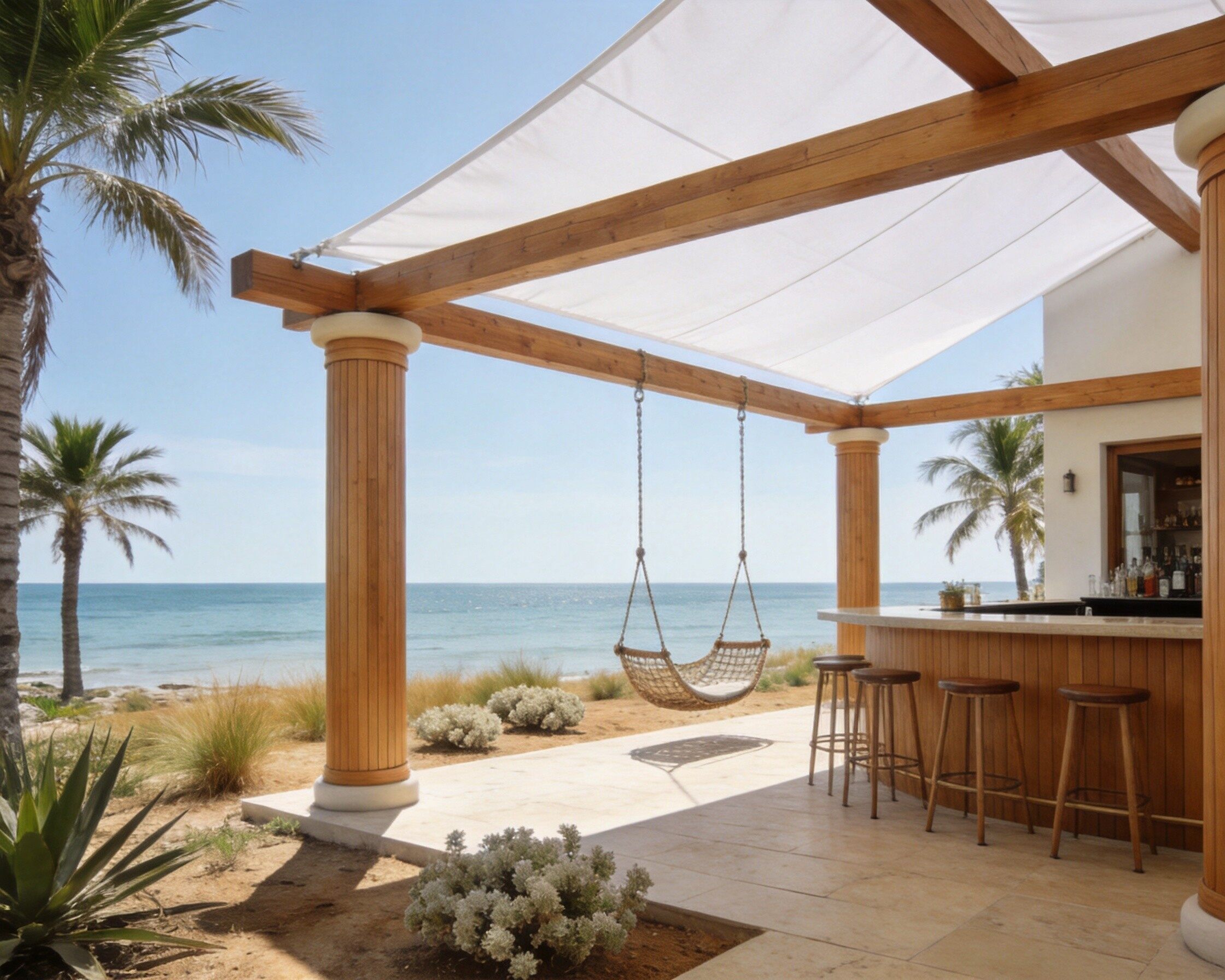
Wondering how much does PVC pergola & gazebo cost for a standard 12x12 backyard setup? We break down the real 2026 pricing, from basic kits to fully customized installations, so you can budget accurately.
The Bottom Line: What You'll Actually Pay
A client emailed us last month with a pretty blunt question: 'I love the zero-maintenance pitch, but how much does PVC pergola & gazebo cost for a standard backyard setup?' It’s the exact question we get every single week. People see the glossy photos of flawless outdoor living rooms, but they want to know the actual damage to their wallet.
Let’s skip the fluff and give you the numbers right away. For a standard 12x12 (144 sq ft) PVC structure, material costs typically range from $3,600 to $8,500. If you’re hiring a professional crew to install it, expect to pay another $1,500 to $3,000 in labor.
So, all-in, you’re looking at roughly $5,100 to $11,500 for a complete, turnkey project.
But does it actually hold up to those numbers in real life? Well, it depends. A basic open-roof kit is on the cheaper end. A fully enclosed, louvered gazebo with integrated lighting and motorized screens? That pushes you straight to the top of the range.
Where Your Money Actually Goes
When you get a quote, it’s easy to just look at the final number and gulp. But understanding the breakdown helps you see where you can negotiate or save.
Materials take up about 65-70% of your total budget. This includes the extruded PVC profiles, the internal aluminum reinforcements (yes, we put heavy-duty aluminum inside our PVC pergola systems for structural rigidity), and the stainless steel hardware. The PVC itself is surprisingly affordable, but the engineering that goes into making it structurally sound is what you're really paying for.
Labor is the next big chunk. Installing a freestanding PVC gazebo isn't like nailing together pine boards on a Saturday afternoon. It requires precise leveling, anchoring into concrete footings, and careful assembly of the louvered mechanisms. If your site is hard to access—like a backyard with no side gate—labor costs will tick up because the crew has to carry everything through the house.
Then there are the accessories. LED strip lighting, retractable bug screens, and ceiling fans usually add $800 to $2,000 to the final bill.
What Drives the Price Up (or Down)
Not all 12x12 structures are priced equally. Here are the main variables that swing the cost:
Roof Style: This is the biggest factor. An open rafter roof is straightforward. But if you want adjustable PVC louvers that you can tilt to block the sun or let in rain, you're adding 30-40% to the material cost. The motors and gears aren't cheap.
Color and Finish: Standard white or beige is always the most affordable. If you want a custom wood-grain wrap or a dark charcoal finish, the manufacturer has to run a special extrusion batch. That usually adds 10-15% to the material price.
Wind and Snow Loads: If you live in a coastal area or a heavy snow region, you need a beefier structure. We engineer our heavy-duty profiles to handle up to 30 lbs per sq ft of snow load and 110 mph wind speeds. That extra aluminum reinforcement costs more upfront, but it keeps your gazebo from turning into a kite during a storm.
The Wood Trap: Upfront vs. Long-Term Cost
Here’s what nobody tells you about going cheap with traditional wood. A cedar or pine pergola might cost $2,500 to $3,500 upfront. Sounds great, right? You just saved a few grand.
But fast forward five years. You’re spending $400 on sealant and stain. Ten years? You’re replacing rotted posts and warped beams. By year fifteen, you're basically rebuilding the whole thing.
Our PVC structures come with a 25-year warranty. They feature UV Grade 4-5 resistance, meaning they won't chalk, crack, or fade into a sad gray color. They also carry a B1 fire rating, which is a massive safety upgrade over dry timber. When you factor in the zero maintenance—just an occasional hose-down—PVC is actually cheaper over a 15-year lifespan. You're paying a premium on day one to save money on day 5,000.
Smart Ways to Keep Costs Down
If the numbers are stretching your budget, you don't have to abandon the project. You just need to get strategic.
First, stick to standard sizes. A 10x10 or 12x12 footprint uses off-the-shelf components. The moment you want a 13x17 custom size, you're paying for custom cuts and extra waste.
Second, do the prep work yourself. The most expensive part of installation is the concrete work. If you can dig the holes, pour the footings, and set the post anchors yourself, you can easily shave $800 to $1,200 off the labor bill. Just make sure you use a string line and a level, or the whole structure will be crooked.
Finally, buy direct from the factory or a dedicated manufacturer rather than a middleman retail store. Cutting out the distributor markup can save you 20% on the materials alone.
Frequently Asked Questions
Do I need a building permit for a 12x12 PVC pergola?
Most of the time, yes. Any structure over 100 sq ft usually requires a permit. Because our PVC gazebos are engineered with specific wind and snow load ratings, we provide the structural calculation sheets you need to pass inspection easily.
Can I install it myself?
Technically, yes. A basic open-roof kit is a solid weekend DIY project for two people. But if you're installing a motorized louvered roof, we highly recommend hiring a pro. The electrical wiring and mechanical alignment need to be perfect.
Will the white PVC turn yellow in the sun?
Not if it's made correctly. Cheap PVC will yellow. Our products use UV Grade 4-5 titanium dioxide coatings, which actively reflect UV rays and prevent yellowing and chalking for decades.
How do I clean it if it gets moldy?
Just mix some mild dish soap with warm water and use a soft bristle brush. For tough mildew spots, a 50/50 mix of white vinegar and water works like a charm. Never use harsh bleach or pressure washers on a high setting, as you can damage the surface finish.
Can I attach it to my house?
Yes, but you need a ledger board. You can't just bolt the PVC directly to your house siding. You'll need to remove the siding, mount a treated wood or metal ledger board to the house framing, and then attach the PVC pergola to that. It requires careful flashing to prevent water leaks into your home.
Building an outdoor living space is a big investment, but it completely changes how you use your home. If you're ready to look at specific designs or want a custom quote for your exact backyard dimensions, reach out to our team. We'll help you figure out what fits your space—and your budget.