
How Much Does PVC Pergola & Gazebo Cost? (2026 Price Guide)
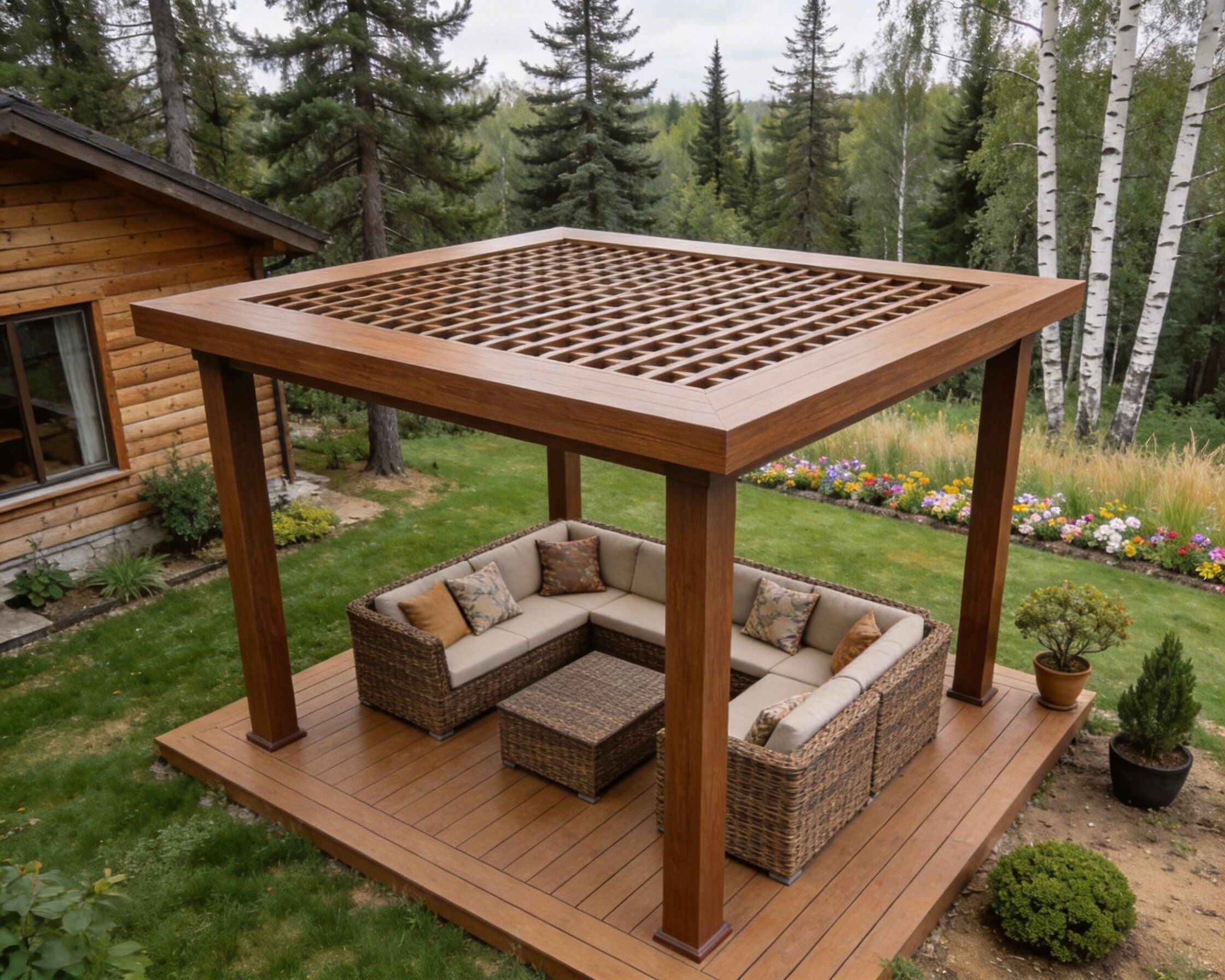
Wondering about the true cost of a PVC pergola or gazebo for your backyard? We break down the 2026 pricing, material expenses, and long-term value so you can budget accurately without any surprises.
Last month, a homeowner in Texas reached out with a very specific question: 'I want a low-maintenance backyard retreat, but how much does a PVC pergola & gazebo actually cost?' It is the right question to ask. Too many people get blindsided by the final invoice because they only looked at the sticker price of the materials.
Here is the thing: pricing is not just about the plastic. It is about the entire ecosystem of your project. Let us break down exactly what you should expect to pay in 2026, where your money actually goes, and how to avoid the classic budget traps.
The Real Average Cost of PVC Pergolas & Gazebos
If you are just looking for a quick ballpark, a high-quality PVC pergola or gazebo typically runs between $25 and $60 per square foot for the materials alone. For a standard 12x16 foot structure (192 sq ft), you are looking at roughly $4,800 to $11,500 just for the kit.
But wait, that is just the starting line.
When you factor in professional installation, footings, and those little extra trim pieces you inevitably need, the total installed cost usually lands between $45 and $85 per square foot. So, for that same 192 sq ft footprint, expect your final out-of-pocket to be anywhere from $8,600 to $16,300.
Sound like a lot? It might be. But let us look at what you are actually buying. Our premium PVC pergola kits come with a 25-year warranty, UV Grade 4-5 fade resistance, and a B1 fire rating. You are not just buying plastic; you are buying two decades of not having to sand, stain, or replace rotting wood.
Where Does the Money Actually Go?
Breaking down the invoice helps take the sting out of it. Generally speaking, here is how a typical project budget shakes out:
Materials (55-65%): The core posts, beams, rafters, and lattice. Higher cellular PVC density costs more, but it is what prevents warping in extreme heat.
Installation & Labor (25-35%): This varies wildly. Pouring concrete footings, leveling the ground, and assembling the heavy beams takes time.
Hardware & Accessories (5-10%): Hidden fasteners, post sleeves, decorative end caps, and LED lighting integration.
Here is what we have noticed: people often forget the accessories. You do not want to build a beautiful structure and then realize you need $400 worth of specialized hidden fasteners to make it look right.
6 Factors That Will Make Your Price Swing
There is no one-size-fits-all price tag. The final number depends heavily on a few moving parts.
Design Complexity: A basic fixed-roof pergola is cheap. An adjustable louvered roof system with motorized controls? That easily doubles your material cost.
Profile Thickness: We offer different wall thicknesses for our posts. A 1.2mm wall is fine for a small garden shade, but if you are in a high-wind coastal area, you need the 2.0mm heavy-duty profile. That extra material adds up.
Color and Finish: Standard white is the most affordable. If you want a custom wood-grain wrap or a dark charcoal color that requires specialized UV inhibitors, expect a 10-15% premium.
Site Preparation: Is your backyard flat and accessible? Great. Is it on a steep slope requiring retaining walls and extra concrete? Your installation labor just skyrocketed.
Size and Scale: Economies of scale apply. The cost per square foot drops slightly as the structure gets larger because you are reusing the same expensive corner brackets and post bases.
Freight and Logistics: PVC is bulky. Shipping a massive gazebo across the country costs more than you would think. Buying from a direct manufacturer like Aorai Tech helps cut out the middleman markup.
PVC vs. Wood vs. Aluminum: The Long-Term Math
Let us be honest. If you only look at upfront costs, PVC loses to wood every single time.
Pressure-treated pine pergolas cost about $15 to $25 per square foot. Cedar or redwood pushes that to $30 to $40. Aluminum sits right in the middle with PVC, around $30 to $50 per square foot.
But does it actually hold up in real life?
Wood requires sealing every 1 to 3 years. A professional stain job for a 200 sq ft pergola costs about $600 to $1,000. Do that three times over a decade, and you have spent $3,000 just on maintenance. Plus, wood rots, splinters, and gets eaten by termites.
Aluminum is low maintenance, sure. But it dents, it gets incredibly hot in the summer sun, and it lacks that warm, natural aesthetic. Our WPC and PVC gazebo options give you the look of real timber without the thermal expansion issues of metal or the rot issues of wood. Over a 15-year period, the total cost of ownership for PVC is actually 20-30% lower than wood.
How to Keep Your Budget in Check
You do not have to empty your savings to get a stunning outdoor space. Here are a few practical ways to save:
Stick to standard sizes. Custom widths mean custom cuts and wasted material. Stick to 10x10, 12x12, or 12x16 layouts.
DIY the finish, not the structure. If you are handy, assemble the frame yourself and hire a pro just for the concrete footings and final leveling. Just be careful—PVC expands and contracts. If you over-tighten the hidden fasteners, the beams will buckle in July.
Buy direct. Skip the local big-box home improvement stores. When you source PVC building materials directly from the factory, you bypass the 30-40% retail markup.
Frequently Asked Questions
Is a PVC pergola cheaper than an aluminum one?
Generally, yes. Basic PVC kits are about 10-15% cheaper than premium powder-coated aluminum. However, if you add motorized louvered roofs to both, the price gap narrows significantly.
Will a PVC gazebo fade or chalk over time?
Cheap PVC will. But high-quality, co-extruded PVC with UV Grade 4-5 protection (like what we use) resists fading. You might see a very slight chalky residue after 10 years in extreme desert sun, but it will not change the structural integrity or the core color.
Can I install a PVC pergola myself?
If you have basic carpentry skills and a helper, yes. The kits are designed for DIY. But remember, the posts are heavy, and getting them perfectly plumb is critical. If they are not plumb, the roof panels will not align.
Does a PVC gazebo add value to my home?
Absolutely. Outdoor living spaces are highly sought after. Because PVC requires zero maintenance, future buyers love it. It is a permanent, hassle-free feature that appraises well.
What is the hidden cost people forget about?
Lighting and electrical. If you want integrated LED strip lighting in the rafters, you need to run conduit and hire an electrician. Budget an extra $500 to $1,200 for the electrical work alone.
Building a backyard retreat is a big investment, but knowing exactly where your money goes makes it a lot less stressful. Focus on the quality of the cellular PVC and the strength of the joints, rather than just chasing the lowest upfront price. Your future self—relaxing under a sturdy, rot-free roof ten years from now—will thank you.