
How Much Does WPC Accessories Really Cost for a 100sqft Deck in 2026?
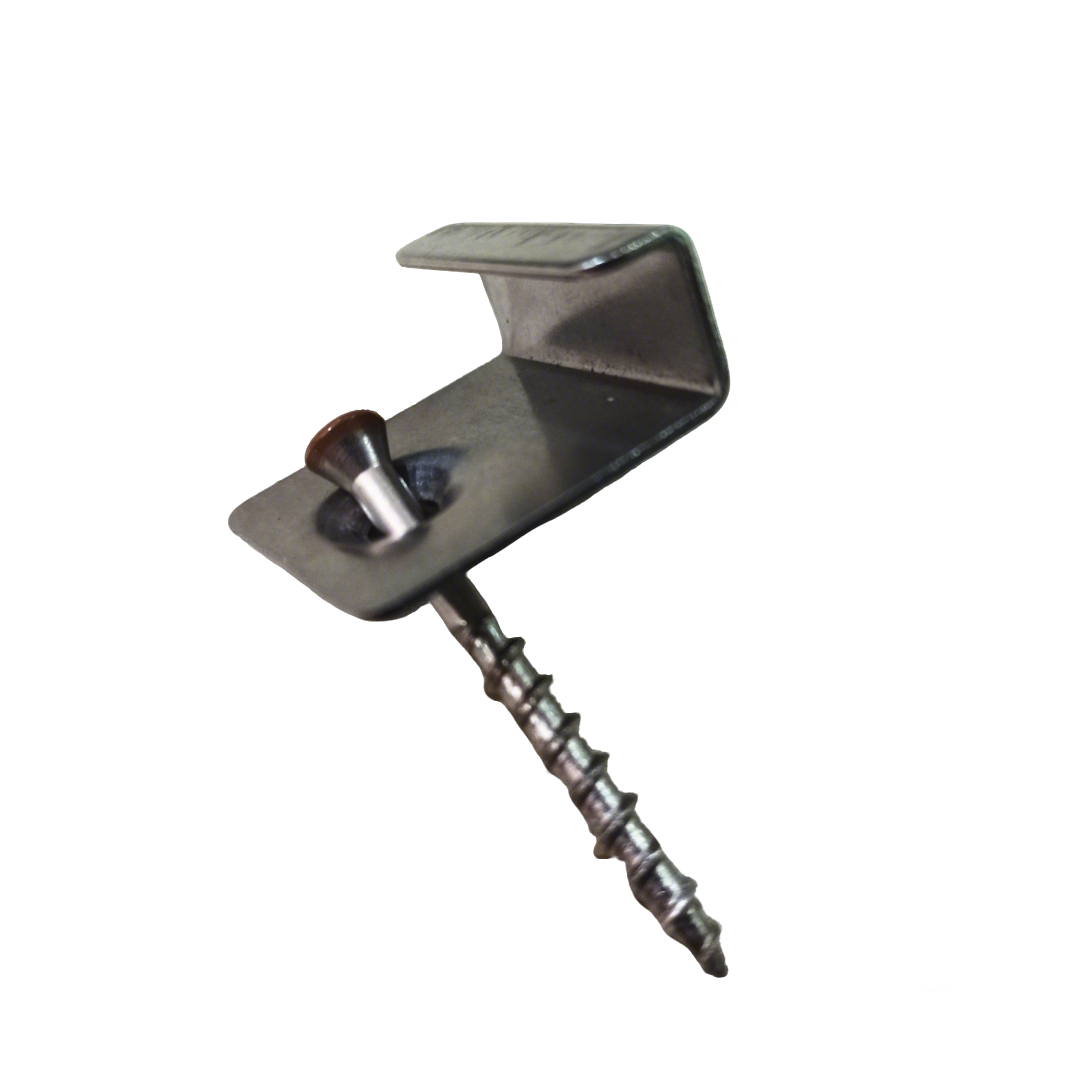
Last month, a contractor stared at his material list and asked us exactly this while quoting a mid-sized project. Here’s the honest truth about what you'll actually spend on WPC accessories in 2026, broken down by real project needs.
The Real Price Tag for WPC Accessories
Look, buying the decking boards is the easy part. It’s the small pieces that make or break your budget. When contractors ask us how much accessories cost, they’re usually bracing for a shock. But frankly, if you know what you’re looking at, it’s pretty straightforward.
Let’s break down the per-piece reality for 2026. For a standard 100-square-foot deck, you’re looking at roughly 400 to 500 fasteners. Our hidden decking clips generally run between $0.15 and $0.25 each. Starter clips are a bit pricier, sitting around $0.35 to $0.50. It sounds like pocket change until you multiply it by five hundred.
Then there’s the skeleton. Composite joists are where the real money goes. Expect to pay about $3.50 to $6.00 per linear foot depending on the profile. And don’t forget the finishing touches. WPC fascia boards and trim usually sit around $2.80 to $4.50 per linear foot.
Where the Hidden Costs Creep In
Here’s what we’ve noticed on job sites: people budget for the clips and the joists, but they completely forget the secondary accessories. It adds up fast.
Take joist tape, for example. It’s about $0.20 a foot. Most DIYers skip it to save a few bucks. The catch is, if you skip the tape, you void that 25-year warranty. Our boards feature a UV Grade 4-5 rating and a B1 fire rating, which is fantastic for the surface. But that doesn't protect the wooden substructure underneath from rotting if water gets trapped between the joist and the board.
Then there are the screws. You can’t just use cheap drywall screws. You need stainless steel or polymer-coated structural screws. They cost about 30% more than standard hardware, but they prevent rust streaks that will ruin your composite fascia two years down the line.
Labor vs. Material: The Time Tax
You might be wondering if you can save money by face-screwing the boards instead of using hidden clips. From what we've installed, here is the reality.
Face-screwing is faster. It cuts installation time by about 15%. But you’re buying more screws, and you’re plugging every single hole. Plugging takes time. And honestly, it rarely looks perfect. Hidden clip systems require a bit more finesse and maybe 10% more labor hours upfront. But the finish is flawless, and the boards can expand and contract naturally without popping your screws.
What Actually Spikes Your Accessory Bill?
Not all decks are created equal. Here are the main factors that will make your accessory costs balloon:
Joist Spacing: Standard straight boards are laid at 16 inches on center. But if you want to lay your boards diagonally, or if you’re using a thinner profile board, you need 12 inches on center. That’s a 33% increase in joist material right there.
Curves and Angles: Picture frames, radial decks, or multi-level transitions require double the blocking and double the clips. Expect your accessory costs to jump 20-25% on complex layouts.
Project Size: Buying 200 clips is one price. Buying 2,000 drops your per-unit cost by about 12%. Bulk buying matters.
WPC Accessories vs. Traditional Wood Trim
Let’s be honest about the competition. Cedar or PVC fascia looks great on day one. Wood fascia costs about $1.80 per linear foot. Sounds cheaper than our $3.50 composite fascia, right?
But paint it. Then paint it again three years later. Over 10 years, that "cheap" wood costs you double in labor and materials. WPC fascia is roughly 30% more expensive upfront. But you install it and walk away. No sanding, no sealing, no replacing rotted sections. When you look at the 10-year total cost of ownership, composite accessories actually win.
How to Trim the Fat From Your Budget
There’s no one-size-fits-all solution, but here are a few ways to keep costs down without cheating on quality:
First, don’t over-engineer the substructure. If you’re using standard straight boards, stick to 16-inch joist spacing. There’s no need to pay for 12-inch spacing unless the manufacturer specifically demands it for your chosen board profile.
Second, bundle your order. We usually recommend ordering all your clips, joists, and fascia in one go. It saves on freight and hits the bulk pricing tiers much faster.
Finally, reuse what you can. If you’re doing a replacement deck and the existing concrete footings are perfectly spaced, you might not need to rip out and replace the entire joist system. Just cap it or reinforce it.
Quick Answers to Common Pricing Questions
Do I really need starter clips?
Yes. They give the first board the proper expansion gap and secure it to the joist. Skip them, and your boards will buckle in the summer heat.
Can I just use wood screws through the top?
You can. But you'll hate the look, and the holes will collect dirt and water. Face-screwing also voids the 25-year warranty. It’s a false economy.
How much should I budget for a 200 sq ft deck?
Roughly $450 to $650 for clips and fasteners, plus $800 to $1,200 for the joist system, depending on your local freight costs and design complexity.
Are color-matched screws worth the extra cost?
Generally speaking, yes. If you have to face-screw in certain areas (like stair treads), color-matched plugs or screws blend in. Standard silver screws will stare back at you every time you walk outside.
Does the clip type affect the price?
Yes. Standard T-clips are the cheapest. Universal clips that work for both grooved and ungrooved boards cost about 15% more, but they give you more flexibility if you change your mind mid-project.
At the end of the day, accessories are only about 15-20% of your total material budget. But they are the skeleton holding the whole thing together. Spend the extra fifty bucks on the right clips, the proper tape, and quality joists. Your future self will thank you when the deck is still perfectly level a decade from now.