
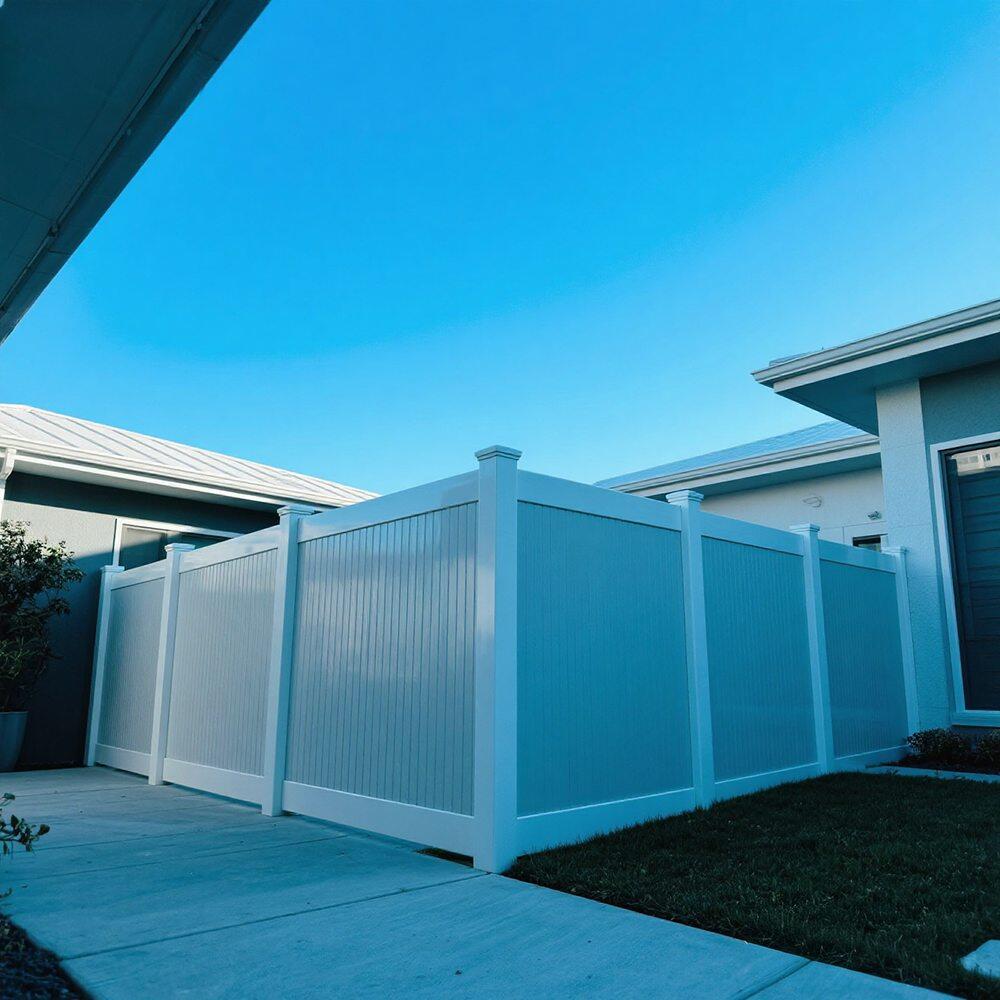
How Much Does WPC Fence Cost? (2026 Price Guide)
Wondering how much a WPC fence will actually set you back? We break down the real costs, from materials to installation, so you can budget accurately for your 2026 project.
The Real Cost of a WPC Fence
Last week, a contractor emailed us asking for a quote on a 300-linear-foot WPC fence project. His client had a strict budget and kept asking, "How much does a WPC fence actually cost compared to just buying cedar?"
It’s the exact question we get every single day. And honestly? There’s no single magic number. But we can give you a highly accurate range.
Generally speaking, a fully installed WPC (Wood Plastic Composite) fence costs between $25 and $45 per linear foot. If you're just buying the materials for a DIY job, expect to pay $12 to $25 per linear foot.
Let's break down exactly where your money goes.
The Cost Breakdown: Where Your Money Goes
Look, pricing a fence isn't just about the boards. Here’s what we actually see on invoices.
Materials ($12 - $25 per linear foot)
This is the cost of the composite boards, posts, and hidden fasteners. Our WPC fence panels are priced to balance premium aesthetics with real-world budgets. You're paying for a product that won't rot, splinter, or need painting.
Installation Labor ($10 - $20 per linear foot)
This varies wildly based on where you live. In high-cost coastal areas, labor eats up a huge chunk of the budget. On flat, easy terrain, a crew can knock out 100 feet in about 2 to 3 days.
Posts and Accessories (+15%)
People often forget the skeleton of the fence. WPC is heavy. You can't always just use standard wooden 4x4s. We usually recommend pairing the boards with our aluminum fence posts or heavy-duty steel cores. Add about 10-15% to your material budget for posts, concrete, screws, and clips.
What Actually Drives the Price Up or Down?
There’s no one-size-fits-all price tag. Here are the main culprits that change your final quote.
1. Fence Height
A 4-foot fence uses fewer boards than a 6-foot privacy fence. Simple math. But going from 4ft to 6ft also means you need heavier posts and deeper concrete footings to handle the wind load.
2. Terrain and Slope
If your yard is perfectly flat, great. If it slopes? The crew has to step the panels or custom-cut them to follow the grade (racking). Sloped yards generally cost 15-20% more in labor.
3. Board Style and Density
Solid composite boards cost more than hollow ones. But here's the catch—solid boards offer better sound dampening and impact resistance. We usually recommend solid for high-traffic backyard borders.
4. Gates and Custom Features
Need a walk-through gate? Add $400 to $800 per gate. Double driveway gates can push that number over $1,500. Gates require heavier hardware, specialized hinges, and more structural bracing. They are almost always the most expensive linear foot on the entire project.
WPC vs. Wood vs. Vinyl (The Long Game)
Let’s be honest. WPC looks expensive on day one. But does it actually hold up in real life? Let's look at the 10-year cost of ownership for a 100-foot fence.
Material | Upfront Cost (100ft) | 10-Year Maintenance | 10-Year Total |
|---|---|---|---|
Cedar Wood | $1,500 - $3,000 | $1,500 - $2,500 (Staining/Sealing) | $3,000 - $5,500 |
Vinyl (PVC) | $2,000 - $3,500 | $200 (Cleaning) | $2,200 - $3,700 |
WPC Composite | $2,500 - $4,500 | $100 (Basic washing) | $2,600 - $4,600 |
Wood is the cheapest upfront. But by year four, you're spending $500 to $800 on professional staining. If you skip it, the wood grays and cracks.
Vinyl is cheap to maintain, but it can become brittle in extreme temperature swings.
WPC sits in the middle. Yes, you pay a premium initially. But our boards carry a B1 fire rating, UV Grade 4-5 fade resistance, and a 25-year warranty. Realistically, you're looking at 15-20 years of zero-maintenance life in harsh climates before even thinking about replacement.
How to Keep Your WPC Fence Budget in Check
Want to bring that per-foot cost down? Here’s what we tell our customers.
Mix materials. You don't need a 100% WPC fence. Use WPC for the visible front yard panels, and switch to a cheaper treated pine or chain link for the hidden side and back yards.
Buy in bulk. If you're doing a massive property line, ask for pallet pricing. Buying 50+ boards at once usually knocks 5-8% off the material cost.
DIY if you're capable. Labor is your biggest expense. If you have a weekend, a good drill, and a post-hole digger, installing the fence accessories and boards yourself saves roughly 40% on the total project cost. Just make sure your posts are plumb and set in concrete!
Quick Answers to Common Pricing Questions
Is a WPC fence cheaper than a wood fence?
Upfront? No. WPC is roughly 30-50% more expensive to install initially. Long-term? Absolutely. Once you factor in the cost of wood stain, sealants, and replacing rotted boards every 7-10 years, WPC pays for itself in about 5 to 7 years.
How much does a 100-foot WPC fence cost?
For a standard 6-foot tall, fully installed WPC fence, expect to pay between $2,500 and $4,500. If you DIY the materials only, you're looking at $1,200 to $2,500.
Does WPC fade and lose its value?
Cheap composite will fade. Premium WPC won't. Our boards use a co-extruded cap layer with UV Grade 4-5 resistance. It might lighten slightly in the first 8-12 weeks as the wood fibers settle, but it won't turn chalky or peel.
Do I need to treat the cut ends of WPC boards?
Unlike wood, you don't need to seal the cut ends of WPC to prevent rot. However, for a clean look and to hide the hollow core (if using hollow boards), we recommend using color-matched end caps or a quick dab of exterior silicone. It’s a $10 fix that makes a $10,000 fence look professional.
Are there hidden costs I should know about?
The biggest one is old fence removal. If you're tearing down an existing wood fence with concrete-set posts, demolition and haul-away can add $3 to $7 per linear foot. Always get that in the quote.
Final Thoughts
Pricing a fence is about looking at the whole lifecycle, not just the receipt on day one. If you need a barrier that looks great on install day and still looks great a decade later without breaking out the paintbrush, WPC is worth the investment.
Measure your linear footage, decide on your height, and get a few quotes. You'll quickly see where the value really lies.