
PVC Pergola & Gazebo vs wooden pergola: which is better? Full Comparison 2026
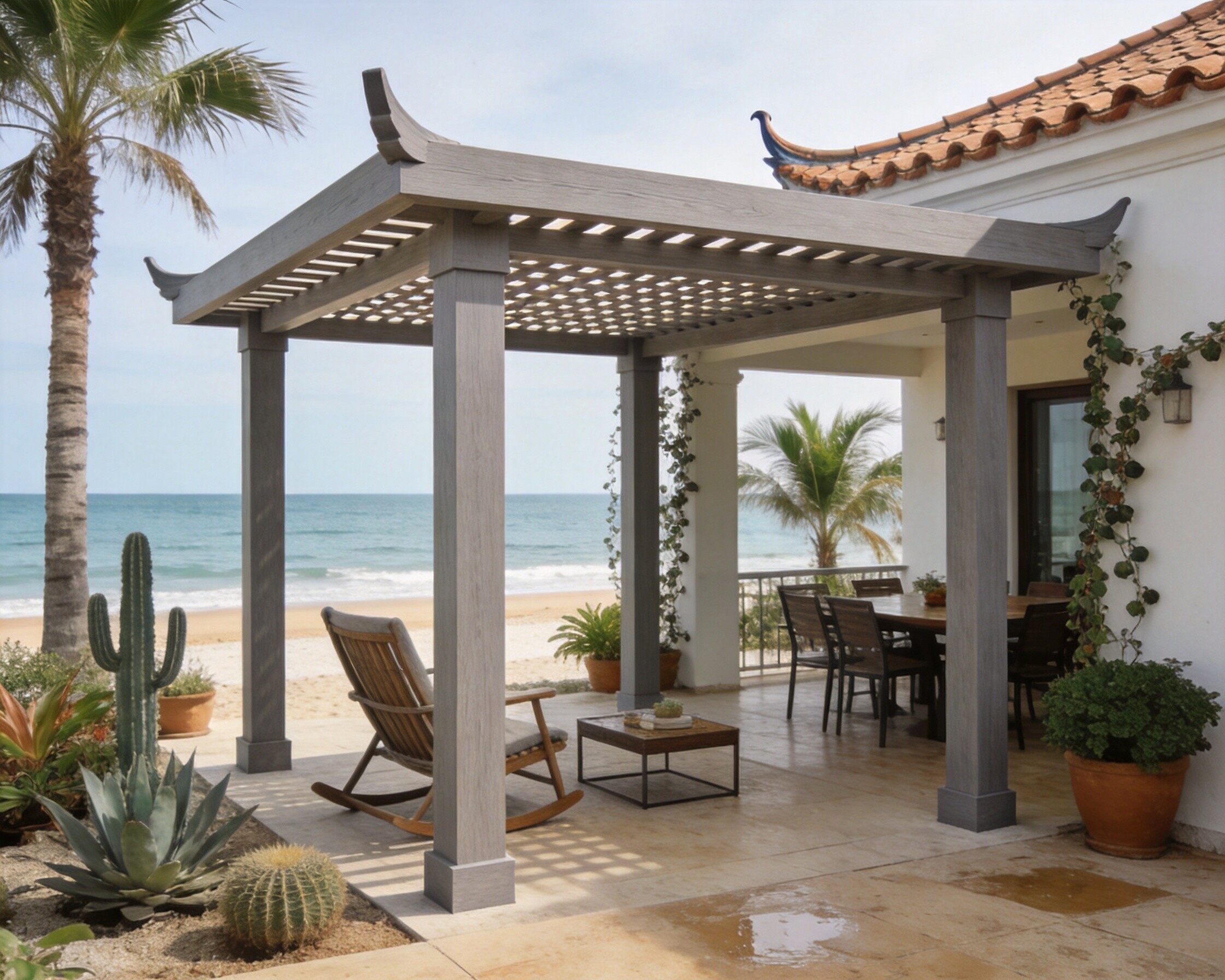
Deciding between a PVC Pergola & Gazebo and a traditional wooden structure can feel overwhelming, but we're here to cut through the marketing noise. This 2026 guide breaks down the real-world costs, maintenance, and lifespan to help you figure out which is actually better for your backyard.
Last month, a homeowner in Florida emailed us with a question we get almost every week: "I love the look of wood, but I'm tired of staining it every single year. Is a PVC pergola actually worth the switch?"
It’s a fair question. Wood is the traditional choice, and it has that classic, warm aesthetic. But when you're looking at PVC Pergola & Gazebo vs wooden pergola: which is better? The answer isn't just about looks. It's about what you're willing to do every weekend for the next decade. Let’s break down the reality of both materials.
Quick Comparison Overview
Before we dive into the weeds, here’s a high-level look at how they stack up against each other.
Feature | Wooden Pergola | PVC Pergola & Gazebo |
|---|---|---|
Upfront Cost | $15 - $40 per sq ft | $30 - $45 per sq ft |
Lifespan | 10 - 15 years | 25+ years |
Maintenance | High (staining/sealing every 1-3 yrs) | Low (occasional soap and water wash) |
Weather Resistance | Low (prone to rot, warp, termites) | High (waterproof, UV resistant, B1 fire rated) |
Installation Time | 2 - 3 days | 1 - 2 days |
Durability & Lifespan: The Reality Check
Here’s what nobody tells you about wood: it’s essentially a giant sponge. Even pressure-treated pine or premium cedar will eventually absorb moisture, warp, and crack. In our experience, a well-maintained wooden pergola lasts about 10 to 15 years. In harsh, humid climates? Maybe less.
PVC, on the other hand, doesn't care about moisture. Our PVC pergola systems are engineered with a UV Grade 4-5 rating, meaning they won't chalk or fade into a dull grey after one brutal summer. They also carry a B1 fire rating, which is a massive safety upgrade over dry, brittle wood. Frankly, when we install a PVC gazebo structure, we back it with a 25-year warranty. Realistically, you're looking at two to three times the lifespan of wood without the structural degradation.
Maintenance: What Are You Really Signing Up For?
Let's be honest. Nobody actually enjoys sanding and staining a pergola. But people do it because they think it's mandatory.
With wood, you're looking at a weekend project every 1 to 3 years. You need to clean it, sand down the rough spots, and apply a fresh coat of sealant or stain. If you skip a year, the wood starts to grey and splinter.
PVC? You just spray it with a garden hose. Maybe use a little mild soap if there's pollen buildup. That's it. There’s no sealing, no painting, and no sanding. If you value your weekends, this is usually the dealbreaker.
The Aesthetics: Can PVC Really Mimic Wood?
This is the biggest hesitation we see. People look at a wooden pergola and see warmth, character, and natural grain. They look at older PVC and see cheap, shiny plastic.
But the technology has changed drastically in the last five years. Modern PVC pergolas feature deep embossed wood-grain textures and matte finishes. From a distance of more than three feet, most guests genuinely can't tell the difference. It doesn't have the exact organic imperfections of real timber, but it captures the visual warmth without the biological decay.
Cost Analysis: Upfront Price vs. Long-Term Value
This is where things get interesting. If you're strictly looking at day-one costs, wood wins. Basic pressure-treated pine runs about $15 to $25 per square foot. Premium cedar or redwood pushes that to $30 to $40.
PVC pergolas generally cost 15% to 20% more upfront, hovering around $30 to $45 per square foot depending on the profile and complexity. Sound too good to be true? The catch is the long game. When you factor in the $200 to $400 you'll spend every few years on stains, sealants, and professional power washing, the gap closes fast. By year seven, a PVC structure is almost always cheaper than wood.
Installation & Ease of Use
Building a wooden pergola from scratch is a serious undertaking. You're cutting, drilling, and treating raw lumber on-site. Every cut edge needs to be sealed to prevent moisture intrusion. It usually takes a skilled crew 2 to 3 days for a standard 12x16 structure, and that's if the weather cooperates.
PVC structures are highly modular. The pieces are pre-engineered in the factory and often feature hidden fastener systems that give you a clean look without visible screw heads. For a standard size, installation usually takes about 1 to 2 days. It’s significantly more DIY-friendly if you have basic tools and a level, though we always recommend professional help for the heavy lifting and concrete footing.
The Good, The Bad, and The Ugly
Nothing is perfect. Here’s a realistic look at the pros and cons of each.
Wooden Pergola
Pros: Natural, authentic aesthetic that ages uniquely; lower initial material cost; can be custom-cut on-site for highly irregular spaces.
Cons: High maintenance (staining/sealing every 1-3 years); susceptible to rot, termites, and warping; shorter lifespan (10-15 years).
PVC Pergola & Gazebo
Pros: Virtually zero maintenance; immune to rot and insects; 25-year lifespan with UV and fire resistance; modular, faster installation.
Cons: Higher upfront cost; lacks the exact natural grain of real wood (though modern textures are incredibly close); can expand and contract slightly in extreme temperature swings (which our engineering accounts for).
Which Should You Choose?
So, PVC Pergola & Gazebo vs wooden pergola: which is better? There's no one-size-fits-all answer, but we usually guide our customers based on their lifestyle.
Go with wood if you are on a strict initial budget, you genuinely enjoy outdoor DIY maintenance projects, and you want that 100% natural, organic look in a shaded, dry climate.
Choose PVC if you want a "build it and forget it" setup. If you live in a humid, coastal, or highly sunny area where wood would degrade quickly, PVC is the undisputed winner. It just makes sense for long-term homeowners.
Frequently Asked Questions
Can I paint a PVC pergola to match my house?
You can, but you really shouldn't need to. Our PVC comes in several pre-finished colors that won't peel or blister like paint on wood. If you do paint it, you'll void the warranty and create a new maintenance headache for yourself.
Does PVC get hot in the summer?
It can get warm to the touch in direct, peak afternoon sun, just like wood or metal. However, it doesn't retain heat the way metal does, and it won't splinter like hot, dry wood.
Is PVC really termite-proof?
100%. Termites eat cellulose, which is found in wood. PVC is plastic. They literally cannot digest it, so they will ignore it completely.
Will PVC crack in freezing winter temperatures?
High-quality PVC is formulated to handle thermal expansion and contraction. While it gets rigid in extreme cold, our specific blends are impact-modified to resist cracking down to -20°F. Just avoid hitting it with a metal shovel when clearing snow.
How do I clean bird droppings or sap off PVC?
Just use a mixture of warm water and a few drops of dish soap. Wipe it with a soft cloth or sponge. Avoid abrasive scrubbers or harsh chemicals like bleach, which can dull the finish over time.
At the end of the day, your outdoor space should be a place to relax, not a chore list. If you're ready to stop worrying about rotting posts and faded stain, take a look at our PVC pergola and gazebo collections. We'd be happy to help you design a setup that actually fits your life.