
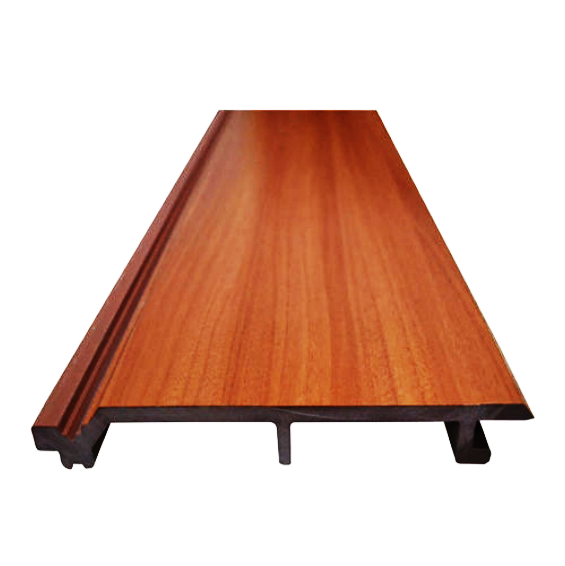
Wall Cladding vs PVC Wall Panels: Which is Better? (2026)
Last month, a contractor called us frustrated about fading PVC panels, sparking the ultimate material debate. Here is our comprehensive 2026 guide to help you decide between WPC and PVC for your next project.
Last month, a contractor called us frustrated. He’d just finished a commercial facade using cheap PVC panels, and the client was already complaining about fading and ugly seam gaps. "Should I have used composite instead?" he asked.
If you're staring down the barrel of the same dilemma, you're in the right place. The "wall cladding vs PVC wall panels" debate comes up constantly in our inbox. Let's cut through the marketing fluff and settle which is actually better for your project.
The Quick Breakdown
Before we dive into the weeds, here is a side-by-side look at how they stack up on paper.
Feature | WPC Wall Cladding | PVC Wall Panels |
|---|---|---|
Upfront Cost | $3.50 - $5.50 / sq ft | $2.00 - $3.50 / sq ft |
Lifespan (Exterior) | 15-25 years | 5-10 years |
UV Resistance | Grade 4-5 (Excellent) | Grade 2-3 (Poor to Fair) |
Maintenance | Very Low | Low (but scratches easily) |
Aesthetics | Premium wood-like texture | Smooth, uniform plastic look |
Durability & Lifespan: The Real Test
Look, PVC looks fantastic on day one. It’s smooth, uniform, and bright. But here's what we've noticed after years of tracking exterior installations: PVC just doesn't hold up under relentless sun. Standard PVC panels will start to chalk and fade within 3 to 5 years if they aren't heavily treated with UV inhibitors. Even then, they rarely pass a UV Grade 4.
WPC wall cladding, on the other hand, is a different beast. Because it’s a blend of wood fibers and polymers, it handles thermal expansion much better. More importantly, premium options like co-extrusion WPC cladding feature a fully wrapped polymer shield. This gives it a UV Grade of 4 to 5. In plain English? It resists fading beautifully. While a PVC panel might need replacing in 7-10 years outdoors, WPC comes with a solid 25-year warranty and realistically lasts 15-20 years in harsh climates without losing its structural integrity.
Maintenance & Care: What’s the Actual Upkeep?
Here’s the thing about PVC: it scratches easily. Once that smooth surface gets marred, you can't just sand it out. You’re stuck with the scratch. Dirt also tends to cling to the static charge of plastic.
WPC is incredibly low maintenance. Most of the time, a quick rinse with a garden hose or a wipe-down with soapy water is all it takes. It doesn't hold static, so dust blows right off. The one downside we see fairly often with WPC is that deep grease stains (like from a BBQ) need a specific composite cleaner. But for general exterior dirt, pollen, and mud? WPC wins hands down.
Cost Analysis: Upfront vs. Long-Term
Let's be honest about the budget. PVC is the undisputed king of upfront cheapness. You're looking at roughly $2.00 to $3.50 per square foot for materials. WPC sits higher, usually between $3.50 and $5.50 per square foot depending on the profile and finish.
That makes WPC roughly 15-20% more expensive on day one. Sound too good to be true? The catch is the lifecycle cost. When we quote a 2,000 sq ft commercial facade, the material difference might be $3,000. But factor in the 15-20 hours of saved labor on replacements a decade later, and the math shifts. If you install PVC outdoors, you might be paying for a replacement project in 8 years. Multiply that by labor costs, and the "cheap" option suddenly gets very expensive. For interior dry areas, PVC makes financial sense. For exteriors, WPC pays for itself.
Installation & Ease of Use
Both materials are relatively DIY-friendly compared to traditional stone or brick. They both utilize tongue-and-groove or hidden clip systems.
However, WPC is noticeably heavier. If you're doing a massive exterior wall by yourself, hauling 15-pound WPC boards up a ladder all day will test your patience. PVC is featherlight. Cutting WPC requires a carbide-tipped blade to avoid chipping the cap layer, whereas PVC can be scored and snapped or cut with standard fine-tooth blades. That said, the extra weight of WPC gives it a more substantial, premium feel once mounted. It doesn't rattle or flex in high winds like thin PVC sheets can.
Pros and Cons Summary
WPC Wall Cladding
Pros: Superior UV resistance (Grade 4-5), highly impact-resistant, 25-year lifespan, premium wood-like aesthetics, eco-friendly materials.
Cons: Higher upfront material cost, heavier to handle during installation.
PVC Wall Panels
Pros: Very cheap upfront, lightweight and easy to cut, 100% waterproof, smooth uniform finish.
Cons: Prone to fading and chalking outdoors, scratches easily, looks "plasticky" up close, shorter outdoor lifespan.
Which Should You Actually Choose?
There's no one-size-fits-all answer. It depends entirely on your scenario.
Choose PVC if: You are cladding an interior bathroom, a basement, or a temporary commercial display. If it’s a dry, indoor environment where UV rays and physical impacts aren't a factor, PVC is a highly cost-effective choice.
Choose WPC if: You are doing an exterior facade, a balcony, a commercial building front, or any area exposed to weather. The initial investment is higher, but you won't be back on the scaffold in five years fixing faded, warped panels.
Frequently Asked Questions
Can I use PVC panels for exterior walls?
You can, but we usually don't recommend it. Standard PVC degrades under UV exposure. Unless you are buying specialized, heavily UV-stabilized exterior PVC (which costs almost as much as WPC), it will fade and become brittle.
Is WPC wall cladding completely waterproof?
Yes. Because the wood fibers are fully encapsulated in polymers, water absorption is less than 1%. It won't rot, swell, or harbor mold like natural wood.
How long does PVC wall cladding last outside?
Generally speaking, about 5 to 10 years before significant fading, chalking, or warping occurs. It heavily depends on your local climate and direct sun exposure.
Does WPC cladding fade over time?
All exterior materials experience minor initial color settlement in the first few months. However, high-quality WPC with a co-extruded cap layer (UV Grade 4-5) will resist severe fading for decades.
Which is more fire resistant?
WPC cladding typically achieves a B1 fire rating, making it highly suitable for commercial and residential exteriors. Standard PVC can melt and release toxic fumes when exposed to direct, sustained flame.
Ready to upgrade your exterior? Browse our full range of weather-resistant cladding solutions to find the perfect match for your next project.