
Outdoor Decking vs natural wood decking: which is better? Full Comparison 2026
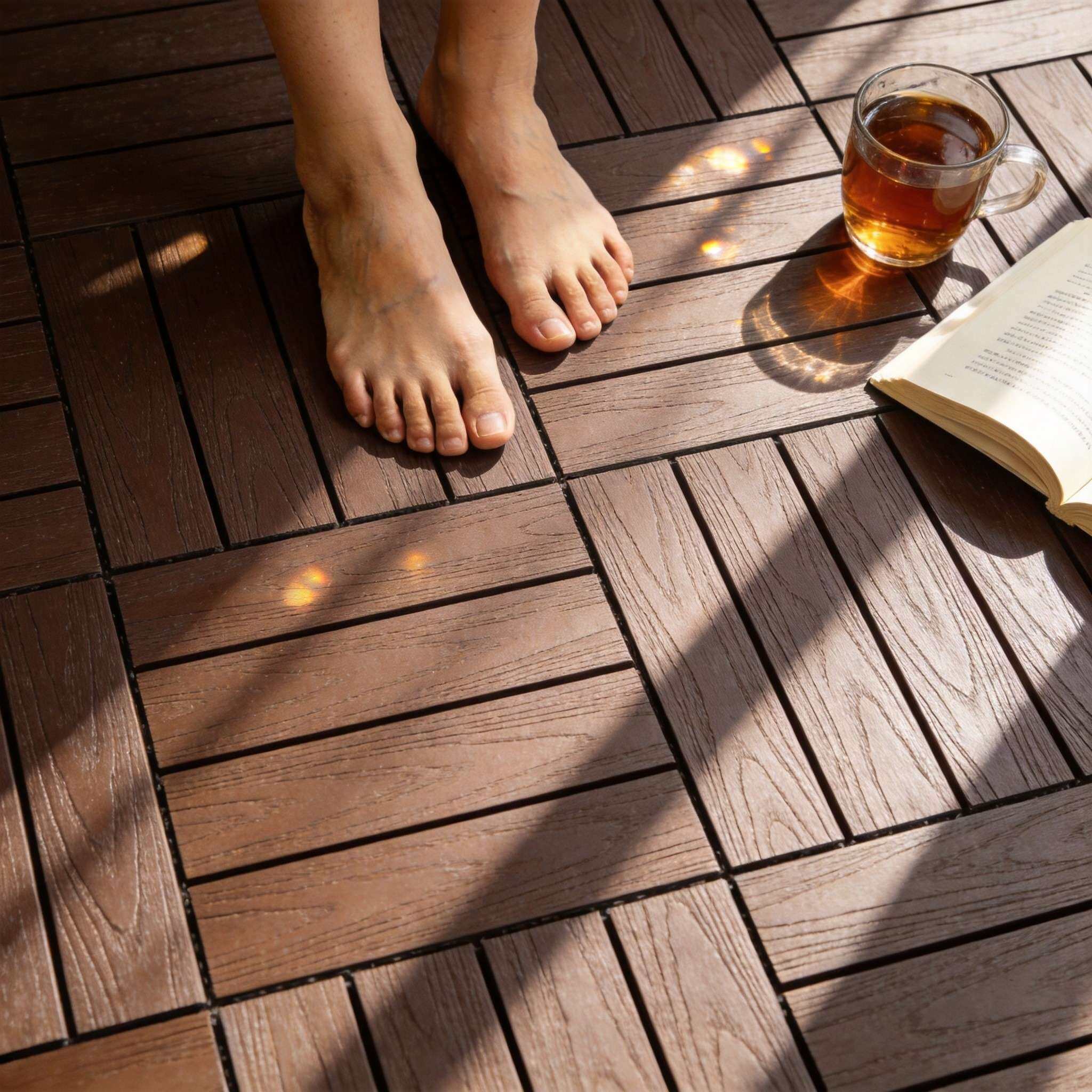
Wondering whether to go with WPC or stick to traditional timber? We break down the real costs, lifespan, and maintenance of outdoor decking vs natural wood decking to help you decide.
Last month, a homeowner asked us a question we hear almost every week: 'I'm building a 300-square-foot patio. Should I just use pressure-treated pine, or is WPC actually worth the extra money?'
Look, there’s no one-size-fits-all answer. But if you're tired of spending your first three summer weekends sanding and staining, you're probably in the right place. Let's get straight into the outdoor decking vs natural wood decking debate. We'll skip the marketing fluff and look at what actually happens after year three.
Quick Comparison Overview
Before we dive into the weeds, here’s the high-level breakdown of what you're actually signing up for with each material.
Metric | WPC Outdoor Decking | Natural Wood Decking |
|---|---|---|
Upfront Cost | $5.50 - $7.50 / sq ft | $3.50 - $8.00+ / sq ft |
Lifespan | 15-25+ years | 10-15 years (with heavy maintenance) |
Maintenance | Soap and water | Annual sanding, staining, sealing |
Weather Resistance | Excellent (UV Grade 4-5) | Poor (rots, warps, splinters) |
Installation | Hidden clips, DIY friendly | Nails/screws, requires pre-drilling |
Durability & Lifespan: What Actually Happens Over Time
Natural wood looks great on day one. But frankly, it's a living material. It expands, contracts, and eventually succumbs to moisture. We've seen beautiful cedar decks turn gray and splinter within four years if they aren't meticulously maintained. Termites and rot are just part of the deal.
WPC, on the other hand, doesn't care about moisture. Our WPC outdoor decking comes with a 25-year warranty, and realistically, you're looking at 15-20 years in harsh climates without major structural issues. It’s got a UV Grade 4-5 rating, meaning it won't fade into a weird patchy mess. Oh, and it carries a B1 fire rating, which is a massive plus if you have a fire pit or grill nearby.
The catch? WPC isn't completely invincible. If you drop a heavy cast-iron grill on it, it can dent. Natural wood can be sanded down; WPC can't. But for 90% of residential use, WPC holds up significantly better without the anxiety of checking for rot every spring.
Maintenance: Your Weekends Are Valuable
Here’s what we’ve noticed from customers over the years: people wildly underestimate the work wood requires.
Natural wood needs sealing or staining every 1 to 2 years. For a 200 sq ft deck, that’s roughly 2-3 days of backbreaking labor—sanding, cleaning, applying coats, waiting for it to dry. If you skip a year, the wood checks and cracks.
With composite? You sweep it. Maybe hose it down. If there's a stubborn stain, a little soap and water does the trick. That’s it. If you value your free time, this alone usually tips the scale.
Cost Analysis: The Upfront Shock vs. Long-Term Reality
Let’s be honest about the price tag. Natural wood is cheaper on day one. Pressure-treated pine runs about $3.50 to $5.00 per square foot. Premium hardwoods like Ipe can hit $8.00 or more.
WPC usually sits between $5.50 and $7.50 per square foot. So, you're looking at roughly 15-20% more expensive upfront for standard composite.
But here's the math nobody talks about. Add in the $150 to $250 you'll spend on stains, sealers, and specialized cleaners every couple of years, plus the cost of replacing rotted boards in year seven or eight. Generally speaking, WPC pays for itself in about 4 to 5 years. After that, it's pure savings.
Installation & Ease of Use
Both materials require a solid substructure (joists spaced 12 to 16 inches apart). But WPC is generally more DIY-friendly. Our boards feature hidden fastener systems, meaning no ugly nail heads on the surface and a much cleaner look.
Wood requires pre-drilling to prevent splitting, especially with hardwoods, and you have to deal with end-cuts and sealing those raw edges immediately. That said, WPC is heavier. A 12-foot solid composite board weighs about 45 lbs, compared to 25 lbs for a pine board. You'll definitely want a helper on site.
Pros and Cons Summary
WPC Outdoor Decking
Pros: Zero annual staining, highly resistant to rot and insects, consistent color, hidden fasteners for a clean look.
Cons: Higher initial cost, can get hot in direct summer sun (lighter colors help), cannot be sanded to repair deep scratches.
Natural Wood Decking
Pros: Lower upfront cost (for pine), authentic natural feel, can be sanded and refinished, stays cooler in extreme heat.
Cons: High maintenance (annual sealing), prone to splintering, warping, and rot, susceptible to termite damage.
Which Should You Choose?
It depends on your priorities, honestly.
Choose natural wood if: You have a very tight initial budget, you genuinely enjoy the physical work of woodworking and staining, or you're building a temporary structure you plan to replace in a decade.
Choose WPC if: You want an 'install it and forget it' solution, you live in a high-moisture or termite-prone area, and you don't want to spend your holidays power-washing and sanding.
Frequently Asked Questions
1. Can I install WPC directly over my old wood deck boards?
No. You need to strip it down to the joists. WPC requires proper joist spacing (usually 12 to 16 inches on center) for structural integrity and drainage.
2. Does WPC get hotter than wood in the summer?
Yes, slightly. Darker colors absorb more heat. If you're building a pool deck in a hot climate, we usually recommend our lighter oak or teak shades to keep it comfortable for bare feet.
3. Is WPC slippery when wet?
Not at all. Our anti-slip decking features a textured wood-grain surface that provides excellent traction, even around pools.
4. Can I paint or stain WPC if I want to change the color?
We don't recommend it. WPC is manufactured with solid-through color and UV inhibitors. Paint won't adhere properly and will just peel off.
5. How do I repair a deeply scratched WPC board?
Unlike wood, you can't just sand it out. You'll need to unclip and replace the individual board. Fortunately, the hidden clip system makes swapping a single board relatively easy.
6. Is WPC actually eco-friendly?
Yes. It's typically made from a blend of recycled HDPE plastics and reclaimed wood fibers, keeping both out of landfills while saving trees.
Still on the fence about your material choice? Take a look at your local climate and how many hours a week you actually want to spend maintaining your outdoor space. If you're ready to see how our composite boards look in person, check out our solid composite decking collection to find the right texture for your project.