
WPC vs SPC Flooring: Which Is Better for Your Home? Complete 2026 Comparison Guide
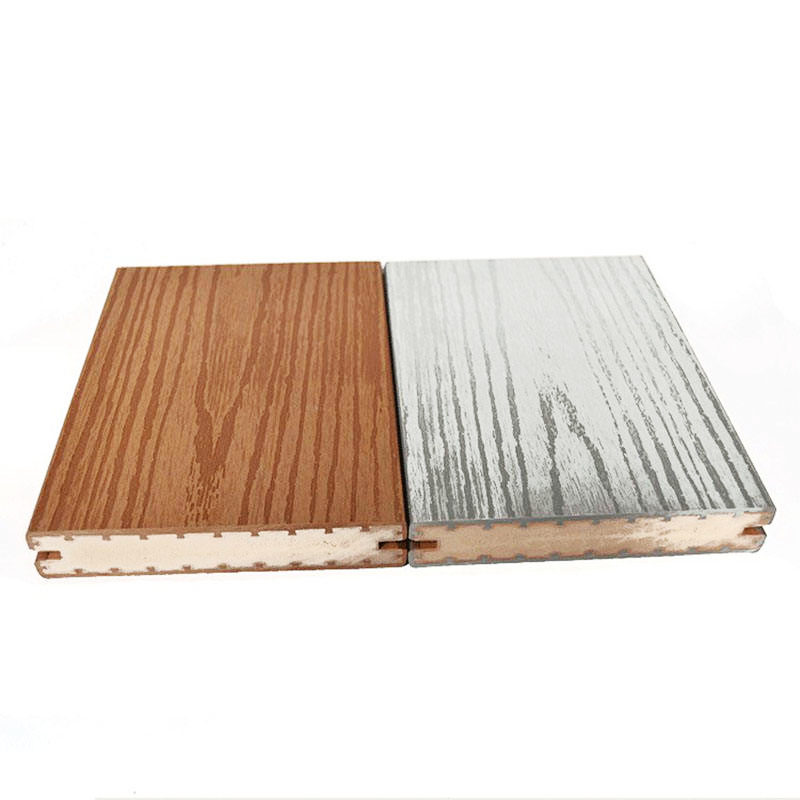
WPC and SPC flooring look similar on the surface — but their core differences in comfort, sound, waterproofing, and price matter for your project. This guide breaks down 10 key dimensions to help you choose confidently.
You're standing in a flooring showroom — or scrolling through suppliers online — and two acronyms keep appearing: WPC and SPC. They both claim to be waterproof, durable, and modern. They both look great in photos. But when it comes to your actual project — a sunlit living room with underfloor heating, a busy hotel corridor, or a rental apartment that needs to survive tenants — the differences between WPC and SPC become critically important.
After 37 years of manufacturing composite flooring, we've helped thousands of project owners, contractors, and architects make this exact decision. Here's everything you need to know.
The Core Difference: Wood vs Stone (Literally)
The names tell the whole story. WPC stands for Wood-Plastic Composite — its core is made from wood fiber (30–60%) blended with thermoplastic polymer. SPC stands for Stone-Plastic Composite — its core uses limestone powder (calcium carbonate, 60–70%) mixed with PVC resin.
Wood gives WPC its warmth, cushioning, and natural thermal properties. Stone gives SPC its rigidity, thinness, and dimensional stability. These fundamental differences ripple through every performance metric.
10 Dimensions Compared: Head-to-Head Data
Parameter WPC Flooring SPC Flooring
Core Density 1.0–1.2 g/cm³ 1.8–2.0 g/cm³
Thickness Range 5.5–8mm 3.5–6mm
Weight 8–10 kg/㎡ 10–12 kg/㎡
Underfoot Comfort Warmer, softer, more cushion Harder, cooler, less give
Sound Insulation (IIC) 60–68 dB (no underlayment) 55–63 dB (no underlayment)
Thermal Conductivity 0.15–0.25 W/(m·K) 0.30–0.40 W/(m·K)
Water Absorption ≤0.5% (24h) ≤0.3% (24h)
Dimensional Expansion 0.5–1.0% 0.2–0.5%
Subfloor Tolerance Up to 5mm/3m deviation ±3mm/3m required
Price (FOB, same wear layer) $15–35/㎡ $12–28/㎡
Comfort & Underfoot Feel: Where WPC Clearly Wins
If you've ever walked barefoot on SPC flooring, you'll notice it feels cool and hard — similar to tile. That's because the limestone core conducts heat away from your feet. WPC, with its foamed wood-plastic core, feels noticeably warmer and softer underfoot.
This matters more than you might think. In bedrooms, living rooms, and any space where people walk barefoot, WPC's natural warmth creates a more comfortable daily experience. For projects with underfloor heating, WPC is the clear winner: its lower thermal conductivity (0.15 vs 0.30–0.40 W/m·K) means better heat retention, while SPC heats up faster but also loses heat faster.
For spaces where underfoot comfort is not a priority — commercial corridors, retail floors, or areas where thin profiles are essential — SPC performs adequately.
Waterproof Performance: Both Excellent, With Nuances
Both WPC and SPC are "100% waterproof" in their core composition. Neither dissolves in water, and both can handle spills, mopping, and humidity without damage.
The subtle difference lies in edge behavior. If water penetrates the click-lock joint and sits trapped for 48+ hours, WPC's foamed core is slightly more susceptible to edge swelling than SPC's denser limestone core. In practice, proper installation with sealed joints eliminates this concern for both types.
Bottom line: For bathrooms, kitchens, and laundry rooms, both perform excellently. For areas with chronic standing water risk (basements, ground-level commercial), SPC has a marginal edge.
Sound & Acoustic Performance: A Real Differentiator
This is where WPC delivers tangible value that spec sheets often understate. WPC's foamed core acts as a natural sound absorber, achieving IIC ratings of 60–68 dB without additional underlayment. SPC's denser core reflects more sound, typically achieving only 55–63 dB — and most SPC products require an attached cork or IXPE underlayment to close this gap.
For multi-story residential buildings, apartments, hotels, and offices, WPC often meets acoustic code requirements without extra cost. This can save $1–3/㎡ in underlayment material and labor — partially offsetting WPC's higher base price.
Durability: The Wear Layer Is What Matters
Surface durability — scratch resistance, stain resistance, wear lifespan — is determined by the wear layer, not the core. Both WPC and SPC use identical wear layer options:
0.3mm — light residential
0.5mm — general residential / light commercial
0.7mm — heavy commercial
With the same wear layer, surface performance is identical. The core difference shows in indentation resistance: SPC's denser core resists furniture leg dents better, while WPC's foamed core can show point-load marks over time (easily prevented with furniture pads).
Expected lifespan with proper maintenance: WPC 15–25 years residential, SPC 15–20 years residential / 10–15 years commercial.
Installation: Similar Systems, Different Subfloor Requirements
Both use Valinge/Unilin click-lock systems with comparable installation speed. The key practical difference:
WPC: Thicker, more flexible boards tolerate minor subfloor imperfections (up to 5mm deviation over 3m). Ideal for renovation projects where perfect leveling isn't practical.
SPC: Thinner, rigid boards demand flatter subfloors (±3mm over 3m). Any deviation risks joint stress and audible clicking.
SPC is more commonly available in glue-down format (3–4mm) for commercial projects requiring flush transitions. WPC glue-down exists but is less common.
Best Applications: Decision Framework
Your Priority Choose
Comfort & warmth underfoot WPC
Underfloor heating efficiency WPC
Acoustic performance (apartments, hotels) WPC
Uneven subfloor (renovation projects) WPC
Thinnest possible profile SPC
Lowest cost SPC
Maximum dimensional stability SPC
Heavy commercial point loads SPC
The 2026 Trend: Hybrid Cores Are Closing the Gap
The WPC vs SPC debate is evolving. Manufacturers are developing hybrid cores that combine wood fiber's comfort with limestone's stability. Meanwhile, SPC is getting thicker (new 6–8mm products with attached underlayment) and WPC is getting thinner (advanced foaming produces 4–5mm boards with improved density). Expect these trends to blur the traditional distinctions further over the next 2–3 years.
Final Verdict
There is no universal "better" — only the right tool for the job.
For most residential projects in 2026, WPC flooring offers a superior balance of comfort, acoustics, and installation flexibility — especially for projects with underfloor heating or acoustic requirements. For budget-sensitive commercial work requiring thin profiles and maximum stability, SPC remains the practical choice.
At Aorai Tech, we manufacture both WPC and SPC flooring with 37 years of composite expertise. Our product lines include indoor WPC flooring, outdoor WPC decking, SPC rigid core flooring, and WPC exterior wall cladding — all CE certified, FloorScore tested, and exported to 50+ countries. MOQ as low as 100㎡ with free samples shipped worldwide.
Need help choosing for your specific project? Contact our technical team for project-specific recommendations.