
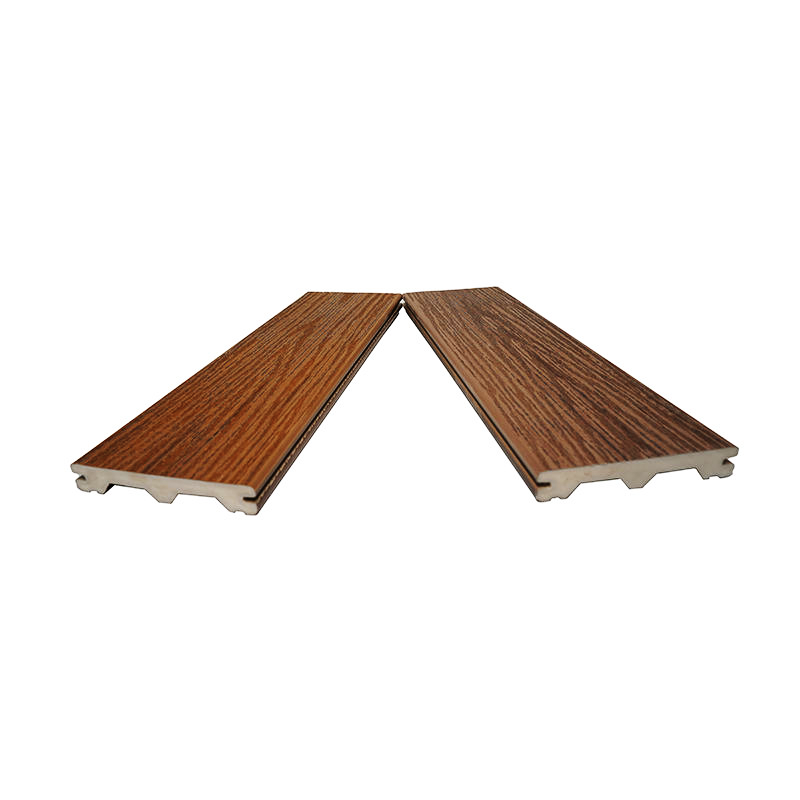
WPC vs Wood Total Cost Comparison: The Complete 10-Year and 20-Year Lifetime Cost Analysis
WPC decking costs more upfront than timber — but the initial price tag tells only a fraction of the story. This analysis breaks down the complete total cost of ownership: material cost, installation, maintenance, repair, and replacement over 10-year and 20-year timeframes for decking, fencing, and outdoor furniture.
The Upfront Price Trap
When comparing WPC composite and timber for outdoor projects, the most common reaction is sticker shock: WPC costs 30-50% more per square meter than basic pressure-treated pine. This initial price difference is real, but it is the least significant component of total ownership cost for materials designed to last decades.
The true comparison must account for five cost categories over the product's full service life: initial material, installation, ongoing maintenance, repairs, and eventual replacement.
Cost Category 1: Initial Material Cost
This is where timber wins — on paper:
Pressure-treated pine: $15-$25 per m²
Tropical hardwood (ipe, merbau): $45-$80 per m²
WPC composite decking: $35-$55 per m² for quality capped products
At face value, pressure-treated pine appears the clear winner. But this ignores what happens after installation day.
Cost Category 2: Installation Cost
Installation costs are similar for WPC and timber. WPC clip systems are slightly faster (10-15% less labor) than face-screwing timber boards. Timber typically requires 10-15% overage for warped or knotted boards; WPC wastage is under 5%. Net effect: roughly equal, with WPC having a slight edge.
Cost Category 3: Ongoing Maintenance (The Game-Changer)
This is where the cost comparison fundamentally shifts.
Timber Deck Annual Maintenance
Cleaning: $100-$200/year
Sanding: $200-$400 every 2-3 years
Staining/Sealing: $300-$600 every 2-3 years
Insect/rot treatment: $100-$200/year
Total: $400-$800 per year
WPC Deck Annual Maintenance
Soap and water cleaning: $50-$100/year
No sanding, no staining, no sealing, no insect treatment
Total: $50-$100 per year
The annual difference is $300-$700 in favor of WPC. Over 10 years, this alone accumulates to $3,000-$7,000.
Cost Category 4: Repairs and Board Replacement
Timber: Board replacement begins at year 5-7. Expect $15-$40 per board plus labor from year 5 onward. Substructure rot repair can cost $500-$2,000 at year 10-15
WPC: The composite does not rot, split, or succumb to insects. Individual board replacement (rare) costs $35-$55 plus minimal labor
Over 20 years, timber repair costs typically reach $2,000-$6,000. WPC repair costs average $200-$600.
Cost Category 5: Full Replacement Cycle
Timber lifespan: 8-15 years (pressure-treated pine: 8-12 years; tropical hardwood: 12-18 years). Most timber decks require at least one full replacement within 20 years
WPC lifespan: 20-25+ years — a one-time installation that does not need replacement within the standard ownership period
A timber deck replaced at year 10-12 effectively doubles its total cost, including full material, installation, and disposal costs.
The Complete 20-Year Comparison: A 50m² Deck
Pressure-Treated Pine Deck (50m²) — 20 Years
Initial material + installation: $2,500-$3,750
20-year maintenance: $8,000-$16,000
Repairs: $2,000-$4,000
Full replacement at year 10: $2,500-$3,750
TOTAL: $15,000-$27,500
WPC Composite Deck (50m²) — 20 Years
Initial material + installation: $3,250-$5,250
20-year maintenance: $1,000-$2,000
Repairs: $200-$600
Full replacement: $0
TOTAL: $4,450-$7,850
WPC saves $10,550 to $19,650 over 20 years on a standard 50m² deck. Even starting with WPC's higher material cost, the lifetime cost is 50-70% lower.
Beyond Decking: Fencing & Furniture
The same dynamics apply across all outdoor WPC applications:
WPC Fencing vs Timber: Timber fences need re-staining every 3-4 years and replacement at year 10-15. WPC eliminates maintenance and lasts 20+ years. Lifetime savings of 30-50%
WPC Railing vs Timber: Timber rail posts rot at ground contact within 5-8 years. WPC railing with 316 stainless hardware lasts the full installation life with zero maintenance
WPC Bench vs Timber Bench: Timber park benches cost $50-$100/year in maintenance. WPC benches eliminate this. Municipal fleets of 100+ benches save $5,000-$10,000 annually
The 10-Year vs 20-Year Perspective
The break-even point where WPC's higher initial cost is fully offset by maintenance savings is typically year 3-5:
At year 10: WPC total cost is approximately 55-65% of timber total cost
At year 20: WPC total cost is approximately 30-50% of timber total cost
At year 25+: The cost gap reaches 70% or more in WPC's favor
The Verdict: WPC Is Significantly Cheaper Over Time
The perception that WPC costs more is based solely on the initial purchase price — the smallest component of total ownership cost. When you account for all five categories over the full service life, WPC composite costs 50-70% less than timber over 20 years. The higher initial investment is recovered within 3-5 years, and every subsequent year is pure savings.
For homeowners, the value proposition is simple: pay slightly more today, save dramatically over the lifetime of your outdoor space, and never spend a weekend sanding or staining again. For commercial and municipal buyers, the value proposition is even stronger — the maintenance budget savings from switching to WPC can be redirected to other facility improvements that enhance user experience.
Related Resources
Frequently Asked Questions
Q1: When does WPC become cheaper than timber?
The break-even point occurs between year 3-5, depending on timber type and local maintenance costs. For premium tropical hardwoods, break-even comes even faster — often by year 2-3 — because maintenance costs are proportionally higher.
Q2: Does WPC add or reduce property value?
WPC supports or enhances property value because it maintains appearance for 20+ years. A deteriorating timber deck reduces curb appeal. Real estate agents increasingly list "composite decking" as a feature because buyers recognize the zero-maintenance value.
Q3: Are there applications where timber might still be more cost-effective?
For very short-term installations under 5 years where the structure will be demolished regardless — such as temporary event structures — the lower initial cost of timber may be pragmatic. For any installation intended to last 5+ years, WPC is the more cost-effective choice on total cost of ownership.
Q4: How does WPC compare to premium hardwoods like ipe?
Premium hardwoods actually have higher initial material cost than WPC ($45-$80 vs $35-$55 per m²) but still require annual oiling. Over 20 years, WPC costs significantly less because maintenance requirements are essentially zero, while premium hardwoods still demand ongoing treatment to maintain appearance.
Q5: What is the environmental cost comparison?
WPC is made from 90% recycled materials (wood fiber and recycled HDPE), diverting waste from landfills. It avoids timber harvesting, chemical preservative treatment, and tropical hardwood transport. Over 20 years, one WPC deck installation avoids 2-3 full timber deck replacements — saving trees, chemicals, and transport emissions.