
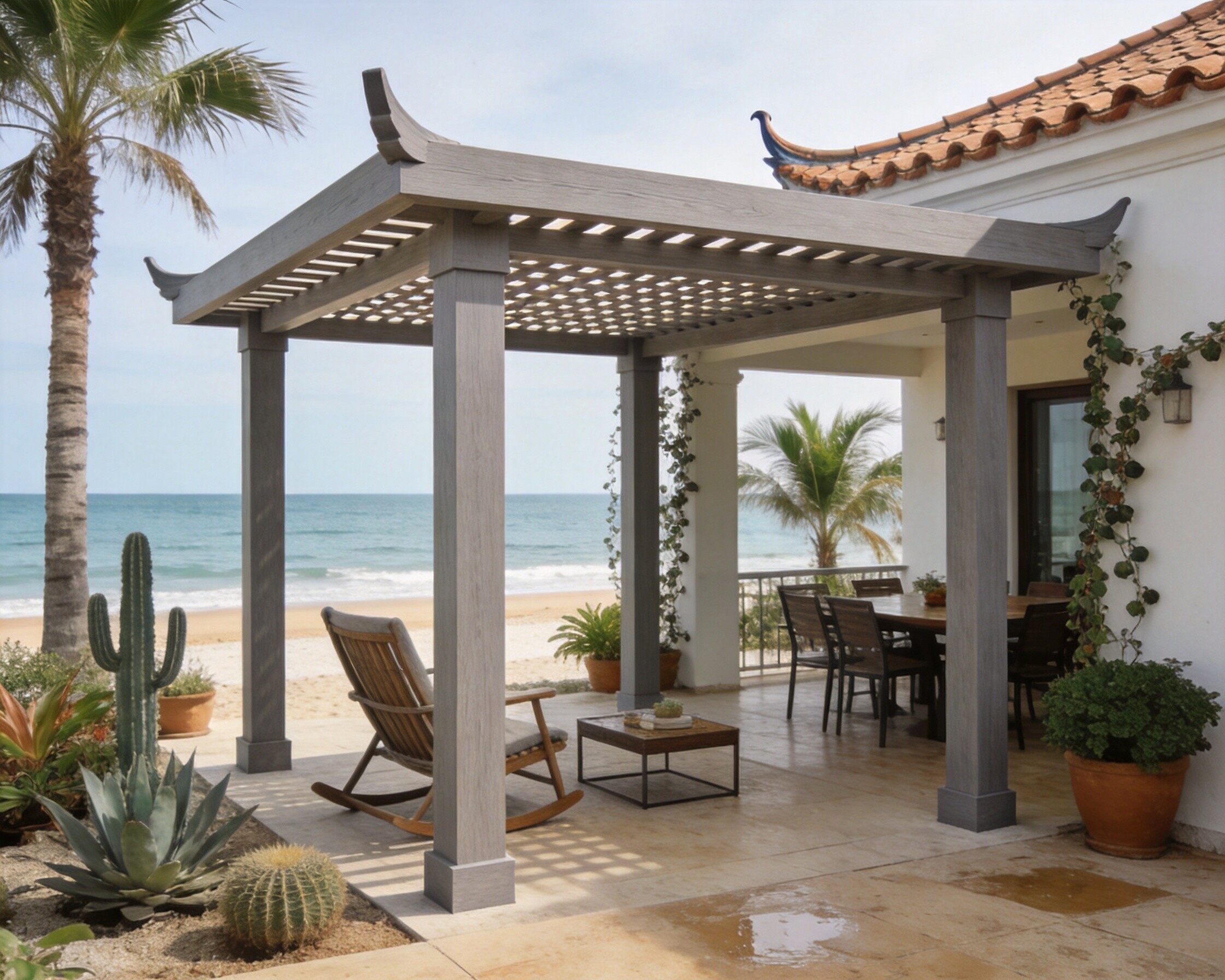
Chlorine-Resistant PVC Pergola | Poolside Splash Zone Shade Retreat
Material: ASA-capped high-density PVC composite; Spec: 150x150mm main posts, adjustable louver blades; Surface: Smooth matte finish with UV-inhibitor; Feature: 100% waterproof, chlorine-resistant, zero rust; Scenario: poolside gazebo; Benefit: Durable, maintenance-free shade structure for wet environments and poolside relaxation.
MOQ: 100 pcs
Key Features
- Waterproof & Moisture-proof
- Anti-corrosion & Anti-termite
- UV Resistant & Fade Resistant
- Low Maintenance & Easy Clean
- Eco-friendly & Recyclable
- Long Service Life
Product Details
Last month, a contractor in Florida called us in a panic. Their client’s brand-new aluminum pergola over the pool was already showing white oxidation spots, and the wood slats were warping from the humidity. It’s a nightmare. We see it all the time. Pool environments are brutal on building materials. The chlorine, the constant splashing, the 100% humidity when the AC kicks on—it destroys standard structures.
That’s exactly why we engineered this specific PVC pergola. It’s not just "water-resistant." It’s practically immune to the poolside environment. Roughly $45 to $60 per square foot for the fully installed kit, it’s built to handle the splash zone without breaking down.
Why a PVC Gazebo Actually Makes Sense by the Pool
Look, most people default to aluminum or treated wood for a poolside gazebo. Aluminum is cheap upfront, and wood looks great on day one. But here’s what nobody tells you about poolside installations: the microclimate is incredibly harsh.
Chlorine vapor alone will eat through standard metal finishes in about 18 to 24 months. Wood? Even pressure-treated pine will eventually rot at the base where it meets the wet concrete deck.
Frankly, our ASA-capped PVC pergola is roughly 15-20% more expensive upfront compared to basic aluminum. But when you factor in zero maintenance and a 25-year structural warranty, the math shifts. We usually recommend this to contractors and architects who are tired of getting callback complaints about fading or rusting. It just works. People think PVC looks cheap. That used to be true ten years ago. But with modern ASA co-extrusion, the matte finish actually mimics the look of painted aluminum without the maintenance.
Key Features for Poolside Gazebo Setups
We didn't just slap a PVC label on a standard frame. We tweaked the design specifically for wet, humid zones. Here is what you're actually getting:
Chlorine & Saltwater Immunity: This is the big one. The ASA co-extruded cap stock completely blocks chemical penetration. You can splash chlorinated pool water on it daily, and it won’t oxidize or turn chalky.
100% Waterproof Adjustable Louvers: The blades aren't just water-resistant; they interlock completely. When closed, they divert 100% of rain and pool splash to the hidden internal gutters. Your outdoor furniture stays bone dry.
Hidden Internal Drainage: Water runs down the posts and out through the base. No ugly external downspouts ruining the aesthetic of your poolside relaxation space.
Thermal-Stable Core: We use a reinforced multi-cavity design inside the PVC. It keeps the structure rigid even when the surface temperature hits 140°F in direct summer sun.
B1 Fire Rating & 120 km/h Wind Resistance: Safety matters near outdoor kitchens and BBQs. The PVC is self-extinguishing, and the heavy-duty brackets keep it anchored during sudden summer storms.
Installation Reality Check (Read This Before You Build)
Let’s be honest, installing a PVC pergola isn't exactly like snapping together Lego bricks. It requires precision.
The one downside we see fairly often with PVC is thermal expansion. It moves. If your installers treat it like rigid aluminum and don't leave the proper 3mm expansion gaps at the joints, the whole structure will buckle when the July heat hits.
Also, anchoring near a pool requires care. Don't drill directly into the pool coping if you can avoid it. We recommend using surface-mounted base plates with chemical anchors into the concrete apron. One more thing about the base. Since it's right next to the pool, water pooling around the base plates can cause concrete degradation over time. We always recommend applying a bead of marine-grade polyurethane sealant around the base plate after it's anchored. It adds maybe 15 minutes to the job, but it prevents water from wicking under the metal brackets.
Overall, it takes about 2 to 3 days for a crew of two to install a standard 3x4m poolside gazebo, assuming the concrete is already cured and level.
FAQs About Poolside Gazebo Pergolas
Does the PVC get too hot to touch by the pool?
It gets warm, sure. Any dark material in direct sun will. But our lighter color options (like Sand or Ash Grey) stay roughly 20% cooler than dark wood composites. It’s comfortable to lean against, though you might not want to press your bare cheek to it at 2 PM.
Can I mount a ceiling fan or heavy lighting?
Yes, but with a caveat. You can't just screw into the hollow PVC blades. You need to use our specific reinforced mounting brackets that bypass the blade and anchor directly into the main 150x150mm posts. We include these in the commercial-grade hardware kit.
How do I clean off the pool chemicals and sunscreen?
Honestly? Just a garden hose and a soft brush. If there's a buildup of sunscreen or pool scum, a mix of mild dish soap and water takes it right off. Never use abrasive cleaners or bleach, even though the material is chlorine-resistant. You don't want to dull the ASA surface finish.
Building a poolside oasis is about creating a space that lasts without constant upkeep. You want to spend your weekends relaxing in the shade, not sanding and repainting. If you're sourcing for a project or upgrading your own backyard, this PVC gazebo takes the maintenance headache completely off the table.
Frequently Asked Questions
Related Products
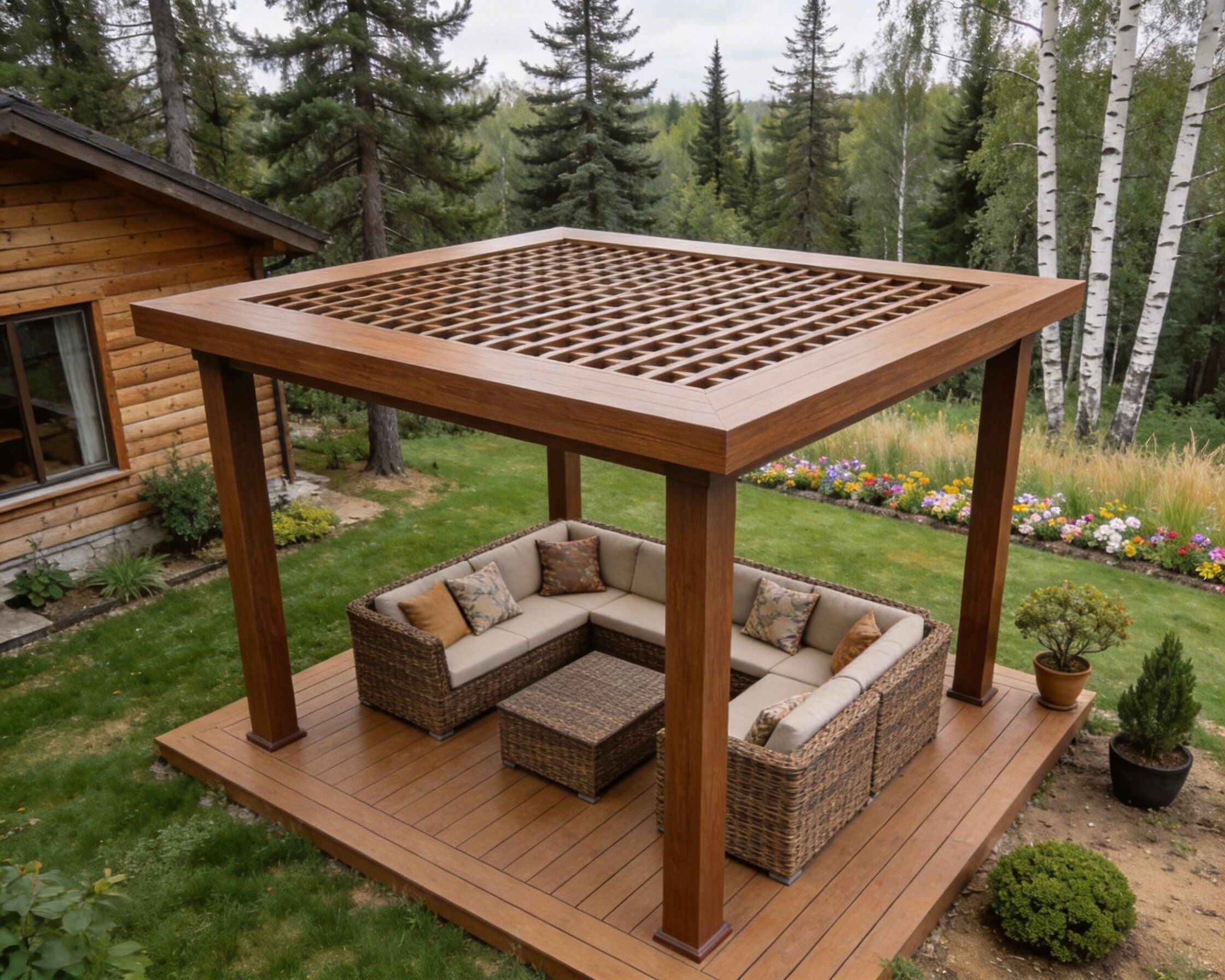
Adjustable Roof PVC Pergola | Residential Patio All-Weather Sun & Rain Shield
$2.460 - $18.20 per sqm
View Details
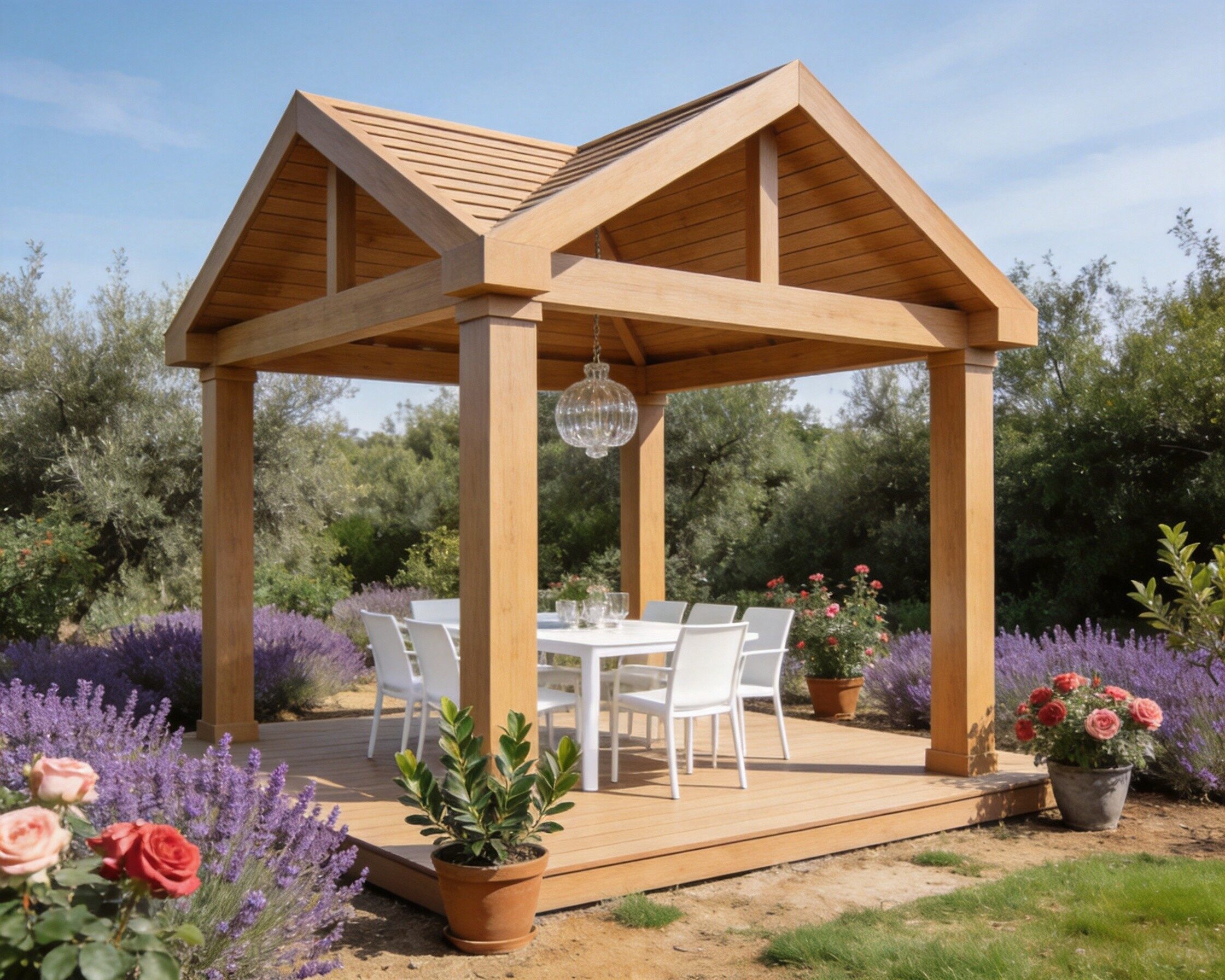
Modular Aluminium PVC Pergola | Patio Cover Weather Protection System
$2.78 - $17.9 per sqm
View DetailsReady to Start Your Project?
Contact us today for a competitive quote and professional consultation
Contact Us Now