
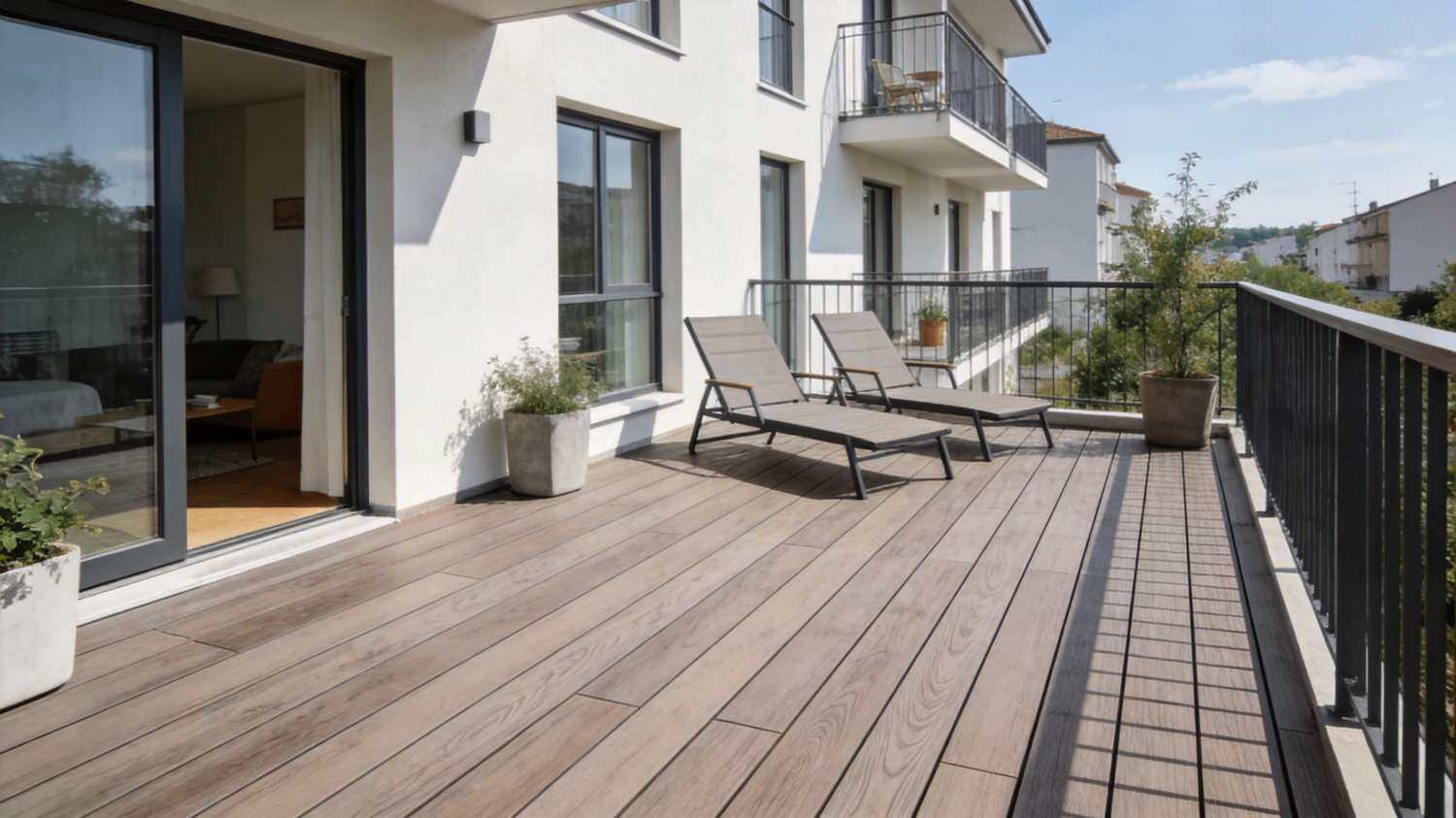
Matching Finish PVC Decking Accessories | End Cap For Finished Board Ends
Material: High-density co-extruded PVC composite; Spec: 145×23mm board compatibility, 50mm length; Surface: Textured wood grain matching decking; Feature: UV-resistant, waterproof, seamless color match; Scenario: end cap; Benefit: Clean, weatherproof finished board ends for long-lasting deck aesthetics.
MOQ: 100 pcs
Key Features
- Waterproof & Moisture-proof
- Anti-corrosion & Anti-termite
- UV Resistant & Fade Resistant
- Low Maintenance & Easy Clean
- Eco-friendly & Recyclable
- Long Service Life
Product Details
Last month, a decking contractor in Miami called our support line. He’d just wrapped up a gorgeous 500-square-foot PVC deck. The client loved the color. But a week later, the contractor got a text: the ends of the boards looked dirty and unfinished. He hadn't ordered the finish caps. Now, he’s driving back out to retro-fit them, eating the labor cost himself. Sound familiar?
Here’s the thing about decking projects. The middle of the boards is easy. It’s the edges, the corners, and especially the ends that make or break the final look. That’s exactly why we engineered our matching finish caps specifically for end cap applications.
Why This PVC Finish Cap Is Perfect for End Cap Applications
Let's be honest. Exposed board ends are a magnet for dirt, pollen, and moisture. Even though our solid PVC boards won't rot or swell like cheap WPC, exposed ends still look sloppy. They collect debris that’s a nightmare to clean. More importantly, they leave the internal structure vulnerable to impact damage from lawnmowers or stray patio furniture.
We designed these end caps to slide right over the board profile. They create a seamless, finished board ends look that blends perfectly with the decking surface. From what we've installed, customers often tell us they can't even tell where the board ends and the cap begins. That’s the goal.
Key Features for End Cap
Let's break down what actually matters when you're capping board ends.
Exact Color and Texture Match: We use the same ASA co-extruded cap stock on the finish cap as we do on the decking boards. It’s not just a close match; it’s identical. UV Grade 4-5 means it won't fade into a weird, mismatched shade after a few summers.
Thermal Expansion Accommodation: This is where a lot of cheap accessories fail. PVC moves. A lot. Our caps feature an internal ribbed channel that grips the board but allows for seasonal shifting. If you install them in 40°F weather, they won't pop off when it hits 95°F in July.
Snap-Lock Installation: No glue. No messy adhesives that fail after a year. The cap snaps securely onto the board edge. It takes about 10 seconds per end. For a standard 200 sq ft deck, you're looking at maybe 30 minutes to cap all the ends.
B1 Fire Rating: If you're doing a commercial job or a multi-family residential build, code compliance is non-negotiable. These caps carry a B1 fire rating, matching the decking itself.
Impact-Resistant Core: The PVC core is dense. If someone kicks the end of the board or drops a heavy planter on it, the cap absorbs the shock without cracking.
The Reality of Installing End Caps
Look, putting on an end cap seems foolproof until you do it wrong. Here are a few things we usually recommend to our wholesale partners to avoid callbacks.
First, mind the temperature. We mentioned thermal expansion earlier, but it bears repeating. If you're installing the deck in the dead of winter, leave a slightly larger gap at the end of the board before snapping the cap on. Give it room to breathe.
Second, cut the board cleanly. If the board end is jagged or splintered from a dull saw blade, the cap won't sit flush. Use a fine-tooth carbide blade. A clean cut means the cap slides on perfectly without forcing it.
Third, don't use a rubber mallet to hammer the cap on. It’s a snap-lock system. If you have to smash it, you’re doing it wrong. Just align it and press firmly with your thumbs until you hear the click.
Frankly, about 70% of installation issues with accessories come from rushing the prep work. Take the extra two minutes to clear out the hollow channels of the board end before sliding the cap over. Dust and sawdust in the channel will prevent a tight lock.
FAQs About End Cap Accessories
Do I really need end caps if I'm using solid PVC?
Yes. While solid PVC won't absorb water and rot, exposed ends still collect dirt and look unfinished. Plus, it protects the board edge from physical chipping. It’s a small investment for a massive upgrade in perceived quality.
Can I trim the finish cap if it’s too long?
You can, but you generally shouldn't need to. They are manufactured to match the exact width of our 145mm boards. If you have a custom non-standard board, you can trim the cap using a fine-tooth saw, but seal the cut edge to maintain the UV protection.
Will the cap color fade differently than the deck over time?
No. Because the cap and the decking use the exact same ASA polymer blend and color masterbatch, they weather at the exact same rate. You won't end up with a deck that looks two different colors after five years.
How many end caps do I need for a standard deck?
It depends on the layout, obviously. But as a rough rule of thumb, calculate the total linear footage of your perimeter and any stair treads. We usually recommend ordering about 10% extra to account for cuts and mistakes.
Frequently Asked Questions
Related Products
Ready to Start Your Project?
Contact us today for a competitive quote and professional consultation
Contact Us Now