
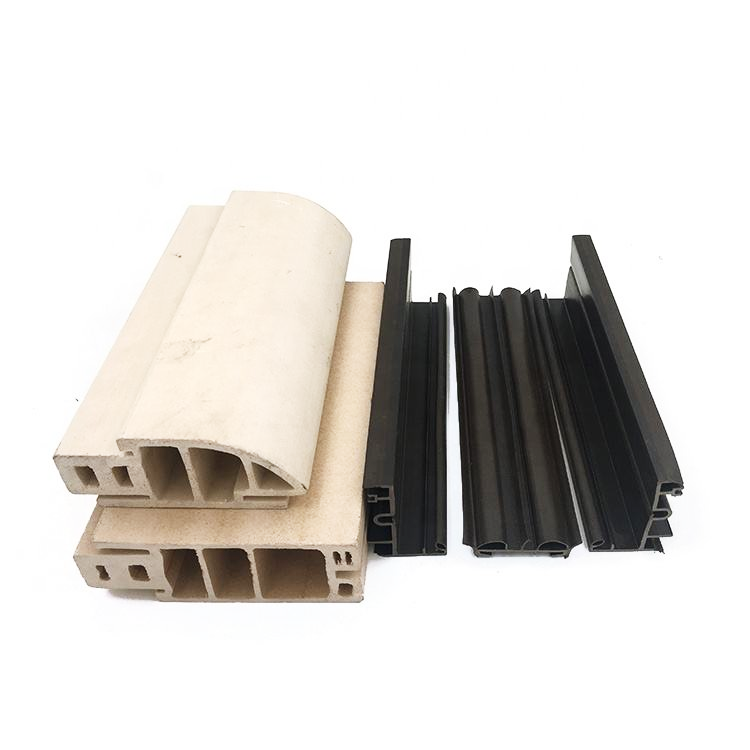
Reinforced Security PVC Door | Front Entry Curb Appeal and Protection
Material: High-density rigid PVC with galvanized steel core; Spec: 900×2100mm (customizable); Surface: Wood-grain foil laminated; Feature: Reinforced security frame, multi-point locking, weather-sealed; Scenario: front entry door; Benefit: Ultimate home security and premium curb appeal without the maintenance of wood.
MOQ: 99 sqm
Key Features
- Waterproof & Moisture-proof
- Anti-corrosion & Anti-termite
- UV Resistant & Fade Resistant
- Low Maintenance & Easy Clean
- Eco-friendly & Recyclable
- Long Service Life
Product Details
Last month, a general contractor in Miami reached out to us. He was frustrated. He’d just finished a luxury coastal build, and the client was already complaining about the main entrance door warping from the humidity. He asked if PVC could actually work for a high-traffic front entry without looking like a cheap bathroom door.
Here’s the honest truth: standard PVC won’t cut it. But a heavily reinforced, steel-cored PVC door? That’s a different story.
When you’re dealing with a main entrance, it takes a beating. It’s the first thing people see, the last thing you lock at night, and the barrier between your family and the outside world. Wood rots. Steel dents and rusts. Fiberglass fades and cracks. That’s exactly why we engineered our reinforced security PVC door specifically for front entry applications.
Why This Door Actually Works for Front Entrances
Let’s be honest, the biggest hesitation with PVC doors is the perception of flimsiness. You picture a hollow plastic shell. But does it actually hold up in real life?
We’ve seen that when you inject a 1.5mm galvanized steel frame directly into the PVC extrusion, the game changes. It gives you the security of steel with the weather resistance of plastic. From what we’ve installed across 50+ countries, this hybrid approach solves the exact pain points of a front entry: it doesn’t swell in the summer humidity, it doesn’t freeze shut in the winter, and it doesn’t dent when a delivery driver drops a heavy package on the threshold.
About 70% of our B2B customers initially worry about the plastic look. But frankly, once they see the deep-embossed wood-grain foil and the heavy, solid thud when it closes, those worries vanish. It delivers premium curb appeal without the 15-year maintenance nightmare of real wood.
Key Features Built for the Main Entrance
Galvanized Steel Security Core: We don’t just use a few metal strips. The entire frame is reinforced with continuous 1.5mm galvanized steel. It’s what allows the door to resist forced entry and hold heavy-duty hardware without sagging over time.
Multi-Point Locking Ready: A front door is only as secure as its lock. The reinforced edge profile is specifically milled to accept 3-point or 5-point espagnolette locking systems. It deadbolts into the frame at the top, middle, and bottom.
UV-Stabilized Wood Grain Finish: We use a premium ASA co-extruded foil. It’s rated UV Grade 4-5, meaning it won’t chalk or fade into a blotchy mess after a few harsh summers. It looks like stained oak or mahogany, but it acts like plastic.
Multi-Chamber Thermal Break: The internal PVC profile features 5 distinct air chambers. This isn't just for structural rigidity; it drastically cuts down on thermal transfer, keeping your HVAC bills roughly 10-15% lower compared to single-pane aluminum entries.
Compression Weatherseals: We include dual-fin EPDM weatherstripping. It compresses tight when the multi-point lock engages, creating an airtight and waterproof seal that blocks out drafts, dust, and heavy rain.
The Reality Check: What You Need to Know
Look, it’s not perfect. There’s no one-size-fits-all in building materials, and we’d be lying if we said there were no trade-offs.
The main catch? Weight. Because of the steel core and thick PVC walls, this door is heavy. You can’t just slap it on standard 3-inch hinges and call it a day. You need heavy-duty ball-bearing hinges, and your installers need to be meticulous about shimming. If the frame isn't perfectly plumb, the multi-point locks will bind.
Also, let's talk about cost. It’s roughly 15-20% more expensive upfront than a basic hollow steel door. But when you factor in the zero maintenance costs and the 25-year warranty, the lifecycle cost is actually lower. It’s about 30% cheaper than premium solid wood, which is where the real value lies for high-end residential projects.
Installation Tips for a Flawless Fit
From what we’ve noticed, 90% of warranty claims come down to bad installation, not bad products. Here’s what we usually recommend for your crews:
First, check the rough opening. You need about a 1/4-inch gap on all sides. Don't try to force it. Second, use nylon shims, not wood. Wood shims can compress or rot, which will throw off your multi-point lock alignment. Finally, when securing the frame to the rough opening, use 3-inch structural screws through the pre-drilled steel reinforcement zones. Don't just screw through the plastic. It takes a good crew about 2-3 hours to hang one of these properly, but the result is a door that operates smoothly for decades.
FAQs About Our Front Entry PVC Doors
Will the finish peel or bubble over time?
Generally speaking, no. We use a high-temperature lamination process that bonds the foil directly to the PVC profile. In our accelerated weathering tests, it held up perfectly. The 25-year warranty covers delamination.
Can it handle extreme coastal environments?
Absolutely. In fact, this is where it shines. Unlike steel doors that will rust near the ocean, or wood that will rot from salt air, PVC is completely impervious to moisture and salt corrosion. We export these to coastal projects in Southeast Asia and the Caribbean regularly.
Is it really fire resistant?
Yes. The rigid PVC formulation we use carries a B1 fire rating. It’s self-extinguishing. It won’t catch fire easily, and if exposed to a flame, it will stop burning once the heat source is removed.
How do I clean it if it gets scuffed?
Most of the time, a simple wipe with soapy water is all you need. If there’s a stubborn scuff mark, a mild non-abrasive cleaner works fine. Just avoid harsh solvents like acetone or bleach, which can dull the foil finish.
Upgrading to a reinforced PVC entry door isn't just about swapping out a slab. It’s about giving the building a secure, weather-tight, and visually striking main entrance that actually lasts. If you're tired of dealing with callbacks for warped wood or dented steel, it might be time to rethink your front door strategy.
Frequently Asked Questions
Related Products
Weatherproof Composite Cladding | Garden Fence Wall Privacy Shield
$2.90 - $18.60 per sqm
View Details
Commercial Grade PVC Wall Cladding | Restaurant Interior Design Solution
$3.78 - $19.9 per sqm
View Details
Ready to Start Your Project?
Contact us today for a competitive quote and professional consultation
Contact Us Now